Card, mobile credential, payment and security

Mobile Access pilots at universities offer valuable insights into life on busy campuses
 By: Brett St. Pierre, Director of Business Development, Education Solutions, HID Global
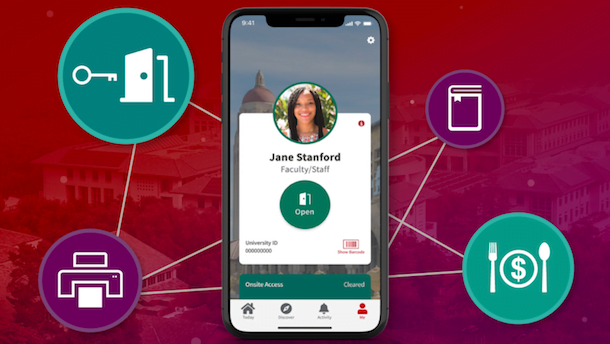
University pilots have previewed the promise of industry advancements that enable smartphones to carry credentials. Students, faculty and staff at university campuses will be able to use a ubiquitous device to open doors and perform other tasks that require presentation of a secure credential. University administrators know that mobile phones seem to be permanently in their students’ hands, making their use for access convenient and quite natural. Much has been learned from the pilots in 2015 that will pave the way for broader deployments in 2016.
In addition to improving convenience, mobile access enables universities to reap the benefit of cost savings on credentials. Plus, students lose their mobile phones less often than they lose their cards so, ultimately, the cost for replacement credentials is reduced.
University employees also benefit from carrying credentials on their phones. They aren’t required to wear their ID cards, so they may arrive at a facility without one and have trouble gaining access. But since most carry their cell phone everywhere, the ability to gain access is a given if these phones also carry their credentials.
In addition, the latest solutions enable universities to implement mobile access on a variety of smartphones without the need for any hardware add-ons or attachments, such as having to insert a handset into a sleeve or slide if it does not support certain features. Institutions that have piloted the HID Mobile Access solution say that this improves user convenience while also giving the university a greater degree of flexibility in offering students, faculty and staff the ability to use their smartphone as their credential without incurring additional expense.
Pilot deployments have shown that a big requirement for mobile access adoption is the ability to use a broad range of phones without a sleeve, slide or other add-on accessory. University administrators have seen NFC pilots in the past but prefer a solution that doesn’t require additional hardware to work on a wide range of handsets. And when they can build on their existing infrastructure, such as an iCLASS deployment, it makes for a natural progression.
Universities are also using pilots to see if solutions are as easy to use as they sound in theory. Unless the alternative to using an existing card is as easy and convenient as mobile access, few administrators see people actually using it. They also need to be sure that the solution is secure and easy to administer.
University pilots of HID Mobile access have met these goals. Early areas of investigation have included questions about what happens to the system if the power goes out. When door access is with fail-over generators, users can still enter buildings during a power failure. Pilot participants also realize that when using a smartphone for mobile access, the device itself must have battery power in order to start the communication between the smartphone and the reader. Most testers report little to no change in battery life on devices that are supporting the HID Mobile Access App.
Reactions from pilot participants have been very positive. According to one university administrator, “they love the convenience – rather than having to dig out their ID cards they just use their phones, which in most cases are already in their hands.”