Card, mobile credential, payment and security
Pilot project enabled bookstore payments via microSD equipped handset
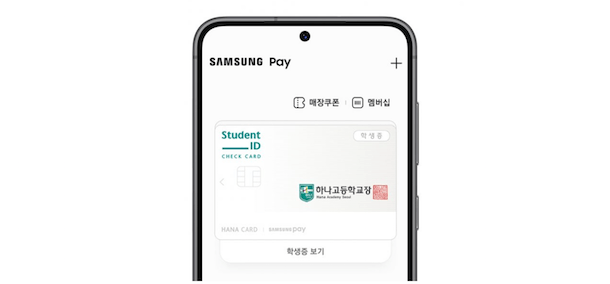
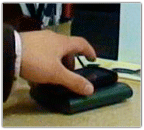 At Brigham Young University-Idaho in Rexburg, 120 students and faculty members are using their cell phones to make payments in the campus bookstore. The mobile technology startup, RFinity, developed the secure solution using microSD cards with Near Field Communication capabilities to enable contactless payments with the devices.
“The RFinity pilot at BYU-I will be one of the first mobile contactless deployments that focuses on securing transactions in a way that reduces the risks associated with legacy payment systems,” says Aaron Turner, RFinity co-founder and CEO.
The company went after BYU in part because of its convenience. The company is located just 20 minutes away from the 12,000 student Rexburg campus, says Wally McPheters, RFinity product manager in charge of the BYU pilot.
For the pilot RFinity supplied participating students’ with a new cell phones–either a Palm Treo or the Ozone phone from Taiwan-based HTC Corp. “I was easier for us to prepare for the first pilot by providing them with phones,” says McPheters.
The phones serve as a replacement or option to the campus’ mag-stripe ID card known as the I-Cards.
For the first stage of the pilot, which lasts through fall semester, the phones can only be used in the campus bookstore and are pre-loaded with scholarships and money to pay for books and it also includes a declining balance account.
“BYU said the university store was the best arena for this pilot,” says McPheters. “It’s a full-scale store and is the center of all activities. The store sells clothing, textbooks, technology, convenience store items, in other words a number of product lines other than educational.”
The goal of the pilot is simple, says McPheters. “We want to prove the technology works and then improve it. It allows us to show financial transactions at POS and give us valuable feedback. We also expect to generate ideas for additional applications.”
No personal data on phone
Andy Cargal, BYU University communications, says each microSD contains the RFinity technology and a unique number that correlates to the student’s account numbers in the BYU database leaving no personal information on the phone.
The pilot is being coordinated with the university store management team, while the outcomes are overseen by the university’s Presidents Council, says Cargal.
Turner anticipates there could be an increase in sales just due to the novelty factor. So far, purchases have ranged from a nickel for gum, up to $1,700 for a MacBook, he says.
Students were chosen for the pilot following several surveys that determined what’s important to them and how they buy, says McPheters. “We wanted a cross section of people who frequent the university store and those who don’t, so we could see how often the phones get used.”
The company surveyed 1,500 students. “We looked for those attributes that would help us ID different types of shoppers, such as single under classmen, single upper classmen and married students,” says McPheters. “These three buy a little differently. That narrowed us right down to about 120. We then reconnected with them all to see if they were still interested and would be here this fall, and what kind of phone they carry.”
Cargal says following the surveys there were more than 500 students who expressed interest in participating in the pilot. He says those who didn’t make the first cut are still on the list when the pilot expands to more students, likely in January.
Students control payment process
Steve McCown, RFinity’s chief technology officer, says the technology can handle two payment modes. Quickpay, for transaction less than $25, requires the user to press a button on the phone to transmit the necessary information to the reader. RFinity requires the user to actively initiate every transaction by pressing the button to protect the information from being accessed fraudulently or inadvertently.
For amounts of more than $25 the user must authorize the transaction by entering a PIN. If a student is standing in line and getting ready to pay for $300 worth of books, he can preauthorize his next transaction by entering the PIN, thus saving time at the POS. Then when he gets to the register, he simply holds down the button to activate quickpay, says McCown.
While $25 is the default amount each participant can adjust it to meet their personal security needs. Some students have insisted on a zero threshold, which means they have to enter a PIN for every transaction, Turner adds.
Input from Giesecke & Devrient
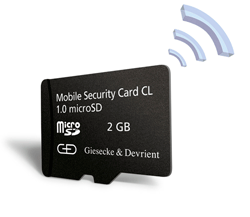 The system uses a microSD card from Giesecke & Devrient called the Mobile Security Card CL (for contactless). The security feature in the Mobile Security Card CL is provided by a cryptography controller integrated in the card along with the flash memory. The card can be used in mobile phones, smart phones, netbooks and even in USB tokens, says McCown.
If a phone is lost or stolen the student can call RFinity and shut down the key, says McPheters.
The second stage of the pilot is likely to include more applications and as many as 1,600 participants. McPheters would not elaborate what those apps would be, but he hinted it could include adding the ability to read from a person’s bank or debit account and expand beyond financial transactions.
“This will be a way for a student to take his student ID card with him virtually. From the student’s perspective, all they’d need is a cell phone,” says McCown.
The project is going well, says Turner. “The thing students told us is that they like not having to carry a wallet into the bookstore, they love the convenience factor. And they like the fact they can control their own security.”