Card, mobile credential, payment and security
Internally built solution enables campus to own its data, avoid vendor lock-in
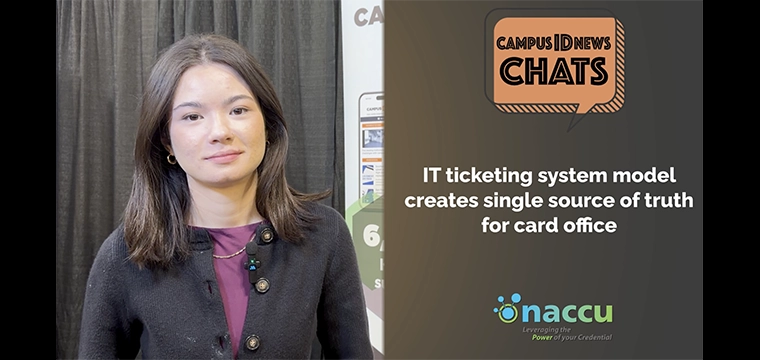
In this episode of CampusIDNews Chats, Alexa Rohr explains how her team approached the University of Arizona mobile credential project, completely rethinking the campus credential ecosystem from the ground up.
Rather than layering mobile wallets onto outdated infrastructure, the University of Arizona focused on creating a flexible, vendor-agnostic environment. It allowed the university to maintain ownership of its own data while keeping systems synchronized in real time. Rohr shares how the university developed two internal tools, Card Sync and Card Pulse. They centralized credential management, automate business rules, and monitor system health across campus integrations.
Being wallet agnostic was really important to us. We wanted to have parity across the board. We didn't want to go with Apple only or Google only.
The approach also prioritized inclusivity by launching support for NFC credentials in both Apple and Google wallets simultaneously, ensuring parity for students and staff regardless of device preference.
She says the operational side of the implementation required replacing meal plan systems, card production systems, point-of-sale infrastructure, campus readers, and downstream credential integrations. While the effort was significant, the university completed the full rollout in just 16 months.
Beyond the technical work, Rohr emphasizes that communication and storytelling were critical to gaining campus-wide buy-in. She encourages institutions to clearly define and share their vision early, highlighting not only security improvements, but also efficiency, cost savings, and user experience benefits.
To watch the full interview, click on the image at the top of this page.
TRANSCRIPT:
At the University of Arizona, when we wanted to go mobile we really took a step back and looked at our entire credential system top to bottom.
We wanted to be vendor agnostic. We wanted to own our own data. It was important to us to have that flexibility to add or change out a vendor as needed, and we wanted everything to be in sync in real time.
That was really the guiding principle of what we implemented.
We built two tools, Card Sync and Card Pulse.
Our model changed that in that our data comes into Card Sync in one spot. Whether it's physical credentials or our mobile credentials, Card Sync sends things downstream to all the systems.
Card Sync is the back-end system. It has all the business and data rules and the logic that you need. Card Pulse is the front end. It tells you if something is in sync, if there's a problem, how to fix it, and do so quickly and in real time.
All of that put together guided us to be flexible because we could do what we needed with the data real time.
Historically, implementations are really long and expensive. If you go from one system to another and you kind of get locked in. Somebody would own your data.
Because Card Sync owns all the rules, we don't have to configure each and every system on every end. That allows us to plug and play things because the rules are all defined and it does the work.
Our model changed that in that our data comes into Card Sync in one spot. Whether it's physical credentials or our mobile credentials, Card Sync sends things downstream to all the systems.
Because Card Sync owns all the rules, we don't have to configure each and every system on every end. That allows us to plug and play things because the rules are all defined and it does the work.
Being wallet agnostic was really important to us. We wanted to have parity across the board. We didn't want to go with Apple only or Google only. We wanted to make sure that our whole campus was inclusive.
We went live with both of them at the same time to meet users where they're at.
I think wallets are great because it works with NFC and it is more secure, it’s fast. Being in the wallet is definitely a benefit. I don't have to have a separate app code to scan it, and it's really where all technology is headed. I think it just aligns there well.
I definitely think that our approach is applicable to all institutions.
In order for us to go mobile, we had to replace our meal plan system, our card production system, point of sale, all of our readers across campus, add mobile, and then fix all of our downstream systems that absorb our credentials.
While that is a big lift, it was really important to do it all at once.
Can it apply to others? Absolutely.
Sometimes doing system by system can really cause that disparity and problem connecting it all in a really thoughtful way. We did all of it in 16 months.
They just need to take a look at everything they have on their campus and understand it, and then plan to try and do it at the same time, or in a way that puts them in a good space.
Sometimes doing system by system can really cause that disparity and problem connecting it all in a really thoughtful way.
We did all of it in 16 months, and that's not just implementation. That includes getting buy in, all the things.
The biggest thing I can say is share the vision. Be really clear on what you're trying to do and paint that story, tell the story, and keep going out there. When you talk to people, they just get really excited about it. All the benefits that come from it.
Don't just talk about security. Look at ways to save money by doing this as well – and the experience, painting that picture, people just want to do it.
The people on the project make a huge difference. We had a small core team of ten people working on the University of Arizona mobile credential project, and that's one of the reasons that really made it more affordable.
Find a team of people that want to do the work. That's my biggest advice.
The people on the project make a huge difference. We had a small core team of ten people, and that's one of the reasons that really made it more affordable.
You know, 16 months, less people. We brought people in and out as needed. But those ten people were so passionate that they were more productive than an entire huge team.