Card, mobile credential, payment and security

Industry veteran Tim Ortscheid from ColorID discusses what’s next in the campus ID space
There are few in the campus card industry with more experience than ColorID’s VP of Sales, Tim Ortscheid. For two decades, he has played a key role in the company’s growth, helping organizations in higher ed, healthcare, government, and enterprise markets implement effective ID and credentialing solutions.
Tim is known for his hands-on, customer-focused approach to sales and relationships. It has made him a trusted resource for organizations navigating the increasingly complex identity landscape.
We had the opportunity to catch up with Tim and get his perspective on the past, present, and future of higher ed identity.
CampusIDNews: In your 20 years in the campus card space, what are some of the biggest changes you've seen?
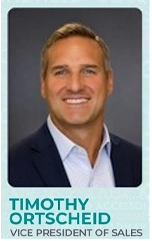 Tim Ortscheid: The biggest change is that the campus card is no longer just a card, and the need for ID authentication is touching more systems and applications.
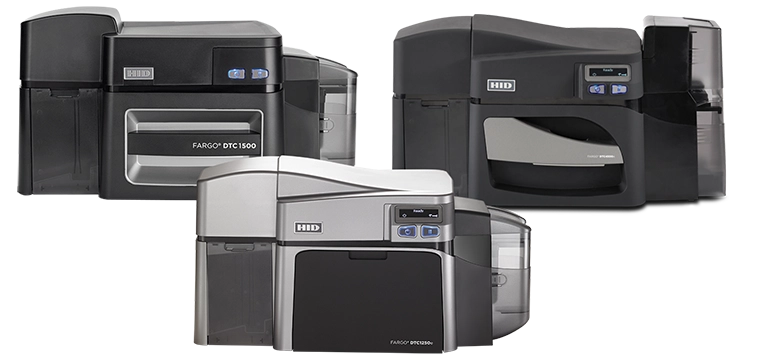
Twenty years ago, the conversation was primarily about producing a physical ID, selecting a printer, and determining what the card would be used for. Today, that credential is part of a much larger identity ecosystem.
Another significant change is that the conversation now extends well beyond the card office. IT, physical security, housing, dining, athletics, HR, admissions, and other departments all have a stake in how identity is managed.
In short, we've gone from managing a card to managing an identity.
CampusIDNews: How has your approach changed, as the product offering expanded and multiple departments in the university got involved?
Tim Ortscheid: It fundamentally changed my approach. I learned that you must understand the problem before you determine the technology.
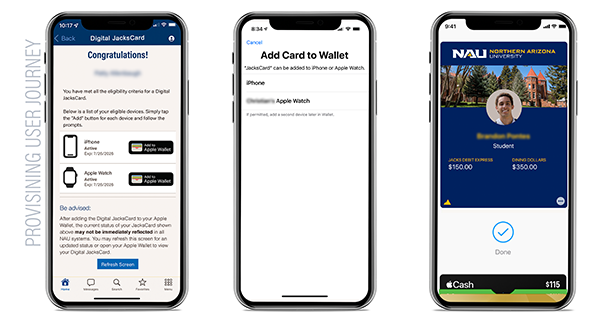
Our offering is really wide ranging now. It spans everything from printers, cards and credential technology to access control readers, mobile credentials, biometrics, visitor management, cloud identity management, remote photo capture, and the software and integrations that connect those systems.
As our portfolio expanded, we found ourselves having conversations with more and more departments within the university.
The best identity solution isn't always a card. Sometimes it's a biometric or a mobile credential. Sometimes it's a better access control reader or simply integrating systems that already exist.
Here’s a great example. We had a university come to us because students were sharing ID cards so other students could get free meals in the dining facilities. It was creating a real revenue problem.
We had to step outside our traditional comfort zone of cards and card issuance and look at the problem differently. Biometrics turned out to be a simple solution that protected revenue and improved the student experience.
But solving the problem required IT, dining, athletics, and the card office to work together.
It taught me that the best identity solution isn't always a card.
Sometimes it's a biometric. Sometimes it's a mobile credential. Sometimes it's a better access control reader, a cloud-based identity system, or simply integrating systems that already exist.
And sometimes it's a combination of all these things.
Plus, identity challenges rarely belong to one department. Our role has evolved from simply providing products to helping customers connect the dots and solve identity and security problems across their organization.
CampusIDNews: What will define the next three years in the higher ed identity and credentialing space?
Tim Ortscheid: I think the next three years will be defined by mobile, biometrics, and interoperability.
Mobile credentials will continue to grow, but I don't think physical cards are going away anytime soon. Higher education will operate in a mixed credential environment – physical cards, mobile credentials, biometrics, and other technologies working together.
We will see more biometrics creating secure and frictionless authentication. It only makes sense. There is no better way to prove you are you then you.
Security will continue to drive the conversation. Universities need stronger credentials, better identity assurance, and systems that can evolve as technology and threats change.
Iris, face, and fingerprint biometric hardware have vastly improved, and the algorithms for matching are outstanding. Today it is not a worry of letting the wrong individual in by accident. The focus now is how fast, efficient, and frictionless can we make the interaction. I can honestly say that we are almost at a frictionless point at the highest levels of security.
Interoperability will also be critical. Universities don't want to rip out everything they've invested in. They want to know, "How do I take what I have today and add the next generation of technology?"
Security will continue to drive the conversation. Universities need stronger credentials, better identity assurance, and systems that can evolve as technology and threats change.
Ultimately, the winners will be solutions that provide choice, interoperability, and a path forward rather than locking universities into a proprietary ecosystem.
CampusIDNews: How is your team adapting to meet these changes?
Tim Ortscheid: We're expanding the way we think about identity.
The ColorID portfolio now touches almost every part of the identity journey. It starts with creating the identity, capturing the photo, and issuing the credential. It extends to controlling access, managing visitors, authenticating someone through a mobile device or biometric, and managing the identity and credentials in the cloud.
We're focused on helping customers migrate at a pace that makes sense for them. That's important because we don't know exactly what identity will look like ten years from now.
We're focused on helping customers migrate at a pace that makes sense for them. That's important because we don't know exactly what identity will look like ten years from now.
We are a true identity solutions integrator. This means we're not tied to one credential, one technology, or one piece of the ecosystem. We're focused on putting the right combination of technologies together to solve the customer's problem today while keeping them positioned for whatever comes next.