Card, mobile credential, payment and security
With 380 university clients in Europe, the company is bringing its card + mobile hybrid approach to the U.S. and Canada
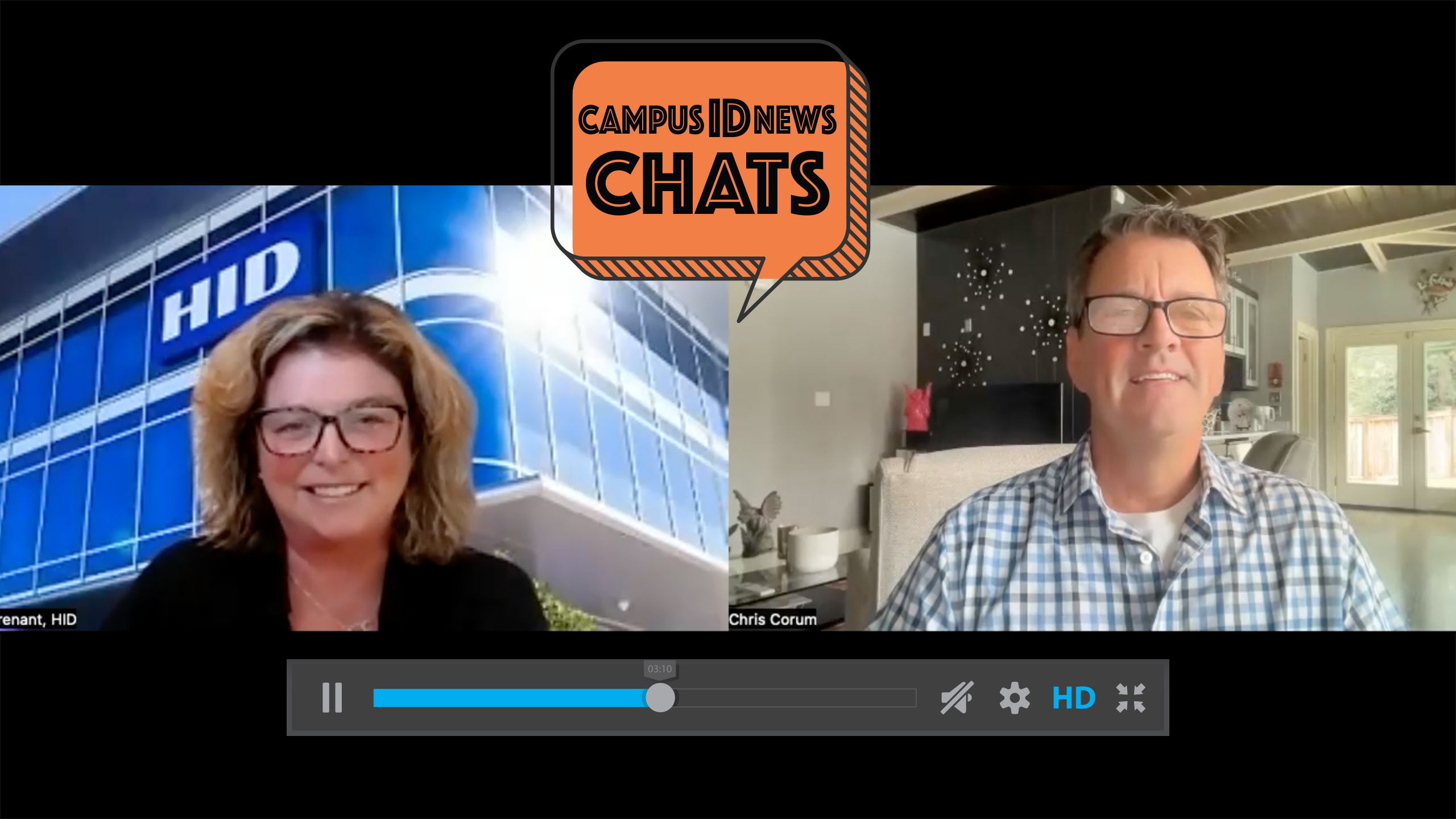
In this episode of CampusIDNews Chats, Tatiana Tomley, Marketing and Business Development Manager for SECANDA, discusses the company’s expansion into North America and explains how its flexible campus identity platform supports both traditional cards and mobile credentials.
Tomley explains that while SECANDA may be newer to the US and Canadian markets, the company supports hundreds of universities across Europe along with enterprise clients including Philip Morris, Merck, and Bosch.
Rather than forcing institutions into a one-size-fits-all solution, she says SECANDA focuses on adapting its technology to each campus’ unique needs and existing systems.
It’s never going to be a fully mobile solution. It’s a hybrid future.
“We want to work with you to solve your specific campus problems,” Tomley says. “We’re not going to change you to fit us.”
A major focus of the conversation centers on mobile adoption and evolving campus credentials. Tomley explains that SECANDA developed its own mobile wallet instead of relying on third-party providers like Apple or Google, helping institutions avoid additional licensing and transaction fees.
Drawing from nearly a decade of mobile deployment experience, she says campuses are moving toward hybrid environments where physical cards and mobile credentials work together.
“It’s never going to be a fully mobile solution,” she says. “It’s a hybrid future.”
TRANSCRIPT:
Hi, I'm Tatiana Tomley. I'm the marketing and business development manager for SECANDA, Inc.
You may or may not have heard of us. We are a company out of Europe. We were founded in 1978 in Germany. Then we grew into Switzerland. We grew into Spain and Italy. And now we've come to the United States and Canada.
We are incorporated in New York City, and also we’re in Toronto for our Canadian clients to be able to invoice directly in Canadian dollars.
We manage 500 total clients. We don't just do universities though that is our bread and butter. We also have really big clients like Philip Morris, Merck, Bosch, and hospitals as well.
We have 380 universities in Europe, so we may seem like the little guy here. We are a big guy. We have a lot of university experience. We manage 500 total clients. So we don't just do universities though that is our bread and butter. We also have really big clients like Philip Morris, Merck, Bosch, and hospitals as well.
We know how to do really big and we know how to do really small.
We started as one card. So that is something we know really well, and we've grown it by really focusing on the person as the main identity of that credential.
So with this, we connect to anything.
We are open to integrate to your existing campus partners and whoever your future partners are, whatever new technologies come in.
We're really great at incremental adoption. So you can start with your grad students. You can start with just your freshman class with us. You can start with just your teachers, whatever works for you.
We’re the most customizable and flexible solution on the market. We want to work with you to solve your specific campus problems. We know there's no one size fits all solution, and we're not going to change you to fit us. We want to adapt our technology to your school.
We have our own wallet and we don't have a middleman – a third party partner like Google or Apple – which would charge you additional licensing fees and transaction fees.
Another thing that sets us apart is that we have our own wallet. So our app is how we make you mobile. We are great at classic one card. We know how to do that. We connect with NFC, with Bluetooth, with this great QR code we have.
And our wallet is our own wallet. We don't have a middleman, a third party partner like Google or Apple, which would charge you some additional licensing fees and additional transaction fees. None of that with SECANDA.
We've developed this really great product in Europe. We had to cut out all the fat, no nickel and diming over there. We have this great, very secure GDPR compliant products. And that's higher than what we have for standards over here in the US. So, you know that we do security well.
About 80% of our schools have at least some mobile element. For them we're seeing 55% of the user population use the mobile option.
With our wallet, we do $240 million dollars in transactions already, and our clients love us. We have a 99% high retention rate. For mobile adoption stats, we first went mobile in 2015, and our schools have been mobile for a decade in some cases.
We've seen the future of mobile adoption, and we're seeing that of those mobile schools, about a little more than 80% of our schools have at least some mobile element. For them we're seeing 55% of student user population, including teachers, too, use this mobile.
It's never going to be a fully mobile solution. It's a hybrid future.
We're seeing a hybrid campus that ties together a really great one card, working with your legacy one card, to elevate it to a new, modern one card that we offer. And this mobile that enhances what you already have.