Card, mobile credential, payment and security

Re-carding a campus and its entire population is a dreaded prospect for any campus card office. It’s a massive project that can be time consuming, tedious and costly.
Why then would an institution undertake a campus-wide re-carding or mass reissuance? Typical reasons for a campus re-carding include:
Whatever the reason, the decision to re-issue credentials carries a number of mission-critical considerations.
Some card offices choose to go it alone, but others look outside the institution for assistance. If university staff members are not prepared to shoulder the full weight of the re-carding project and conduct the work in house, there are vendors ready and willing to aid in the process. Campus card system providers typically offer re-carding assistance as do many ID service providers and resellers.
Assisting with re-carding is part of the service that Heartland Campus Solutions provides to its university clients. Re-carding services can range from providing necessary equipment and planning for an issuance event to the offsite printing of the cards themselves.
Online photo submission expedites re-carding
Online photo submission has proven to be a useful tool for the normal carding process, and it seems likely to be a huge time saver in a mass issuance scenario as well.
“The time spent taking pictures when students are in line can be reduced tremendously,” says Fred Emery, director of OneCard sales at Heartland Campus Solutions. “For an initial carding event or a re-carding where new photos must be taken, online photo upload can provide a more efficient operation.”
Heartland has a number of universities using the MyPhoto solution for online photo submission. “I have heard a lot of positive comments with one campus receiving about 90% of their photos through online submission,” Emery says.
“We also work with third-party vendors to assist in printing the cards,” says Fred Emery, director of OneCard sales at Heartland Campus Solutions. “We assess the needs of the project and depending upon the volume, we recommend options to best achieve the goal.”
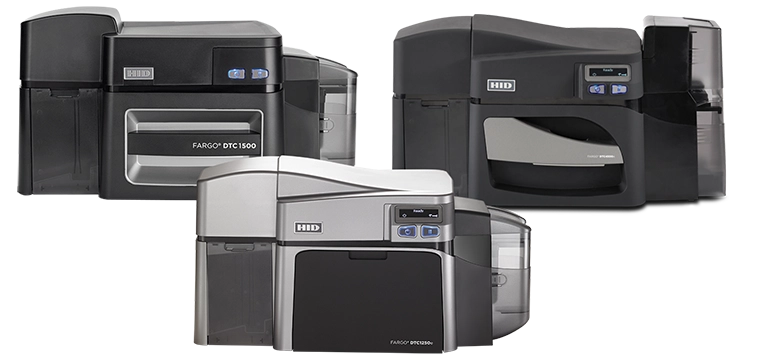
Options can include renting additional printers to enable campus staff to produce the cards directly onsite, producing the cards offsite at Heartland facilities or identifying a third-party partner to meet specific needs, explains Emery.
Blackboard Transact also offers re-carding services for its university partners. “Through our Campus Card Services group, we play an active consultative role to help a client think through decisions related to card stock and re-carding,” says Dan Gretz, senior director of product marketing at Blackboard Transact. “We offer complete end-to-end services, from card procurement all the way through to issuance, for any institution and any card type.”
When factoring in all the costs associated with a campus re-carding, outsourcing the project to an off-site vendor can often save a university time and money, Gretz says. Most universities have limited printer capacity that can make re-carding a lengthy process, but a vendor will have equipment to process the job rapidly.
“Re-cardings often take place when campus staff have a number of competing mission-critical initiatives, so outsourcing also enables campus personnel to focus on other projects,” says Gretz.
There are a number of choices that must be made before embarking on a re-carding project. The initial decision typically is whether to produce cards via pre-issuance or in-person issuance. Each model is ideal for certain situations, and either can meet typical campus needs, explains Mark Degan, corporate marketing manager at ColorID.
If it’s a reissuance situation, the existing card and photo database can be used to pre-issue or pre-print new cards for the existing campus population. If it’s a first time issuance, however, photos may not exist so this could lead a campus to an in-person or instant issuance process. Still, many campuses choose in-person issuance even if they have an existing photo database, so it really comes down to individual choice.
“We generally see universities do a slow rollout when it comes to re-carding, parceling things out by class, faculty, staff and so on,” says Degan. “There are reasons to for full-scale rollouts, though, particularly if the university is migrating card technologies. In that scenario, a university may opt to rip the Band-Aid off right away. The cost is relatively similar for both approaches.”