Card, mobile credential, payment and security
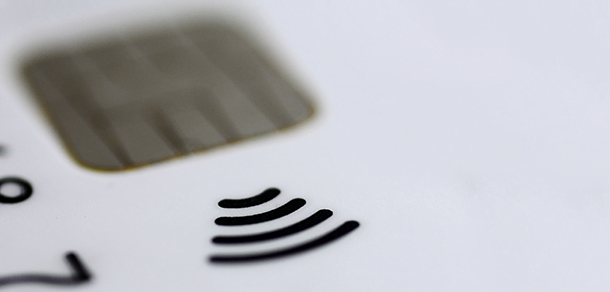
One of the basic technical concepts of RFID involves anticollision. To understand anticollision we first must define a collision. An RFID collision involves multiple cards crashing into each other within a reader's field. This crash need not be a physical touching of cards but rather sending a response to the reader at the same time such that the reader cannot differentiate between cards. Because a major benefit of RFID systems is the rapid throughput and the user convenience that comes from the simple presentment of the token within a reader's field, the likelihood that more than one card will at times be within this field is great. Thus anticollision–a means to process cards when a collision occurs–is critical.
The ISO/IEC 14443 Part 3, a section of one of the international standards for contactless cards, collision is defined as, "transmission by two PICCs (cards) in the same PCD (card reader) energizing field and during the same time period, such that the PCD is unable to distinguish from which PICC the data originated."
Anticollision, or an anticollision loop, is defined as an "algorithm used to prepare for dialogue between PCD and one or more PICCs out of the total number of PICCs responding to a request command."
While the concept is basic the implementation of the concepts can be quite sophisticated. Evidence to this is the more than 50 pages of instructions contained in this ISO document detailing anticollision for the 14443 standard.
Perhaps the best way to explain anticollision is via analogy. Imagine that a clerk at a ticket office comes to work one morning to find 200 people all waiting to purchase tickets for an upcoming concert. Because the ticket office normally serves a small number of patrons, no allocations had been made for organized lines or orderly processing of people. In essence, a collision had occurred at the ticket counter.
The clerk must find a means to process the unruly customers. In other words, he must implement an anticollision scheme. How might he do this? Likely using similar principles that RFID systems have employed.
One option would be to hand out numbers and ask different each person to come to the counter only at the time that his or her number was called. Another option would be to call patrons by letter of the alphabet, asking only those patrons with surnames beginning with "A" or "B" to come to the counter while others wait. If there were too many patrons with surnames beginning with "A," the clerk might further reduce the group to those with surnames beginning with "Aa" or "Ab."
If the clerk is assumed to be the card reader and the patrons are RFID cards or tokens, the same basic principles can be applied. One common type of anticollision scheme involves the assignment of time slots to cards involved in a collision. Much like the clerk assigning numbers and calling patrons at different times basedon these numbers, the card reader assigns time slots and instructs the cards to answer when called. This ensures an orderly transmission of data eliminating the collision.
Another common method of anticollision is called the Bit Collision method. In this method the card reader instructs cards to respond only if their identification number matches the numbers specified. Card data is stored in binary code as a series of bits that are either a "0" or a "1." At its most basic, the Bit Collision method would involve the reader asking all cards whose first bit is "1" to respond. If a collision continues to occur, the reader might ask for all cards whose first two bits are "1–0". Following this pattern all cards will eventually be identified. Remember that the clerk sorted patrons based on alphabetical characters because people have unique names. The card reader sorts cards by numeric characters because they have unique identification numbers or bit patterns.
While it might take the clerk hours to process the 200 patrons, a card reader can process collisions extremely rapidly. The inventory process takes just 5 milliseconds plus 1 or 2 milliseconds per card in the field. That means that the 200 cards could be inventoried and processed in less than 1 second. In reality, users are unlikely to notice that such a sophisticated process has occurred.
ISO 14443 cards utilize the Bit Collision method for anticollision. There is also, however, an alternative method called the Time Slot method that is allowed for in the specification though nearly every implementation of the 14443 standard has opted for Bit Collision. The ISO 15693 standard utilizes an anticollision scheme called the Slot Marker method. All of these methods function well in the field and thus it is less significant which anticollision method a system employs but that it does employ a method. RFID systems without anticollision should be viewed with extreme caution.