Card, mobile credential, payment and security
Removing the workload that killed prior programs is bringing this valued service back
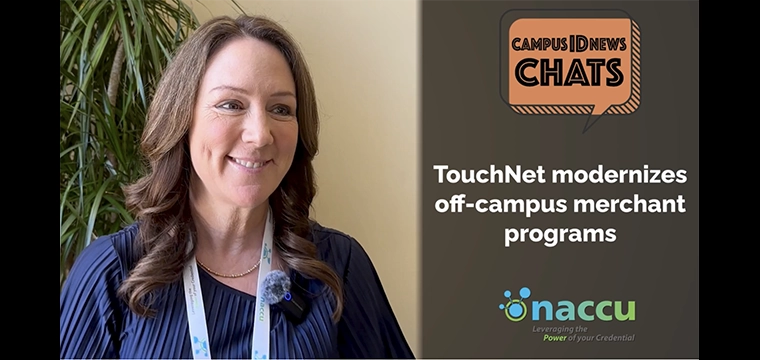
Jennifer McNeill explains how TouchNet is rethinking off-campus merchant programs by addressing the operational challenges that caused many campuses to abandon them. While these programs have traditionally generated revenue, strengthened relationships with local businesses, and expanded where students could use their campus credentials, they often became too labor-intensive for campus card offices to sustain.
By eliminating hardware investments, simplifying settlement, and outsourcing recruitment, the program allows card offices to reintroduce off-campus acceptance with far fewer internal resources.
TouchNet's new approach removes many of those obstacles by leveraging Global Payments' existing payment infrastructure. Rather than requiring campuses to purchase hardware, recruit merchants, or manage complex payment settlements, those responsibilities are handled through Global Payments' existing network and services.
By eliminating hardware investments, simplifying merchant payments, and outsourcing merchant recruitment, the program allows campus card offices to reintroduce off-campus acceptance with far fewer internal resources. McNeill says this gives institutions an opportunity to expand student convenience, strengthen community partnerships, and generate commission revenue. They can do all this without the staffing commitments that made earlier programs difficult to maintain.
TouchNet has also incorporated feedback and best practices from the NACCU community to help campuses structure successful programs and maximize both merchant participation and financial return.
TRANSCRIPT:
I'm Jennifer McNeill, Director of Strategic Partnerships and Development with TouchNet.
We're excited to be here to talk about one of our new initiatives, which is our new off campus program.
We've been listening to campuses, doing a lot of research, hearing from them, and understanding some of the challenges with those old models of off campus programs that were traditionally very valued by campus. They generated revenue, they created a good sense of community ties with local merchants.
We're using Global Payments terminals that are already in place at local merchants, so there isn't a duplication of hardware. It's nothing that the campus card office has to manage or install.
It was a good way for students to learn how to budget within a closed loop system. There were lots of overall experiential benefits to these programs. But what we found is, they've just died off.
There was administrative burden to running these programs, and we heard from campuses that there were three challenges.
The first was with hardware. Campuses didn't want to purchase expensive hardware. They didn't want to run network lines, support, inventory, that those costs and those efforts were just too much for campuses to handle.
The second is the financial settlement. The effort in a complex financial system on campus to issue payments. It wasn't as simple as writing a check and giving it to a merchant.
The third is the effort to go out and recruit local merchants. So be out in the neighborhoods. Campuses are already busy on campus. with internal stakeholders. They're working with dining and alumni affairs, and access control, and all those areas on campus. They just don't have the same time that they would have in the past. So fewer people on campus, fewer staff to work with, and these programs were very labor intensive.
The new TouchNet program tries to take away those three barriers.
The first is that we're using Global Payments terminals that are already in place at local merchants, so there isn't a duplication of hardware. It's nothing that the campus card office has to manage or install. We use that integrated payment terminal.
The second is on payment, so issuing payments. That is entirely handled by Global Payments, as well. Your merchants are getting paid in the same way that they would for debit credit transactions. On those settlement schedules that they already are experiencing.
We've put together some best practices on how to set your commission rates how to generate the most for your campus program, as well as offer the most options for your student community.
The third would be recruitment of new merchants and expansion of the program. We have boots on the ground. Global Payments has people that have relationships with merchants and are able to go out and recruit new merchants for your programs. So, we really find that in talking to campuses, the value of these programs has always been there. It's just been the effort.
We're at this inflection point where campuses have to make that decision. Do we invest, or do we not? Removing some of those challenges opens up a new revenue stream, new opportunities to give better experiences to campuses.
In the past, these have been good revenue generation programs for campuses, collecting commissions, and having those funds go directly back into your operational budgets. Now, it's an even better opportunity for campuses, because they're not paying to purchase terminals or pay for staffing time. We look to the NACCU community to get ideas of what those commission rates should be. We've put together some best practices on how to set your commission rates how to generate the most for your campus program, as well as offer the most options for your student community.
If you're looking for more information on the new TouchNet off campus program, I encourage you to check our website at touchnet.com, or feel free to reach out to me directly at Jennifer.McNeil at touchnet.com.