Campus ID News
Card, mobile credential, payment and security

FEATURED
PARTNERS
slider smartbuilding 1

IFSEC study: Trusted identities bridge gap between connected people, smart buildings

Andrew Hudson   ||   Jun 23, 2017  ||   ,

A recent access control study conducted by IFSEC Global has shed light on how trusted identities can serve as the backbone for smart buildings and today’s increasingly connected society. The study, sponsored by HID Global, hones in on the connected workplace, explores trends in smart buildings, and addresses the growing need for identity-aware building systems.

IFSEC's study focused on how the access control infrastructure combined with trusted identities can connect disparate systems for enhanced monitoring and a better user experience as people enter and move around buildings, as well as access various systems or leverage building services once inside. With advanced technology now commonplace for even basic, everyday tasks, the study's findings could be telling for a number of verticals.

“Most respondents want more integrated smart buildings and business applications that seamlessly work together. While many of them are realizing these benefits by using common management frameworks with centralized databases, this approach is generally quite expensive,” says Ashish Malpani, director of product marketing at HID Global. “The study reveals how trusted IDs offer a viable alternative for achieving a connected building at lower cost, better ROI and improved user experience--all by providing systems with knowledge of identities and their authorizations for access to elevators, parking garages, vending machines, printers and other systems.”

According to the report, 85% of respondents were aware that identities can be connected across multiple systems and devices, and more than 60% believe that having everything on one ID card or mobile device will provide operational efficiencies. More than half or respondents have already connected their building systems to access control applications, and stated that converging systems can be a factor in deciding to upgrade the access control infrastructure.

Top applications include integrated logical access, AV conferencing, elevators, secure print, locks for interior draws and racks and HVAC control. Other key findings include:

  • 63% of respondents defined their building as “smart” to at least some degree, a 13% increase as compared to a 2016 IFSEC Global report on smart buildings.
  • 60% of respondents said that their access control systems are already integrated with other buildings systems, and roughly the same percentage believe that system integration is hugely beneficial for user convenience.
  • 51% of respondents have already integrated time and attendance systems.
  • 45% cited asset tracking as the most likely system to be integrated in the future.
  • System integration can also be a trigger for access control upgrades – at least 40% cited converged physical and logical access as a decision factor.
  • Other top upgrade triggers included enhanced security (65%), multi-factor authentication (46%), and multiple ID form factors, such as mobile devices and cards (41%).
  • Roughly 67% of respondents believe that IT and facilities/security management teams need to work together more closely when buying, installing and using new technologies.
Subscribe to our weekly newsletter

RECENT ARTICLES

recycling center with conveyor belts
Jun 25, 26 /

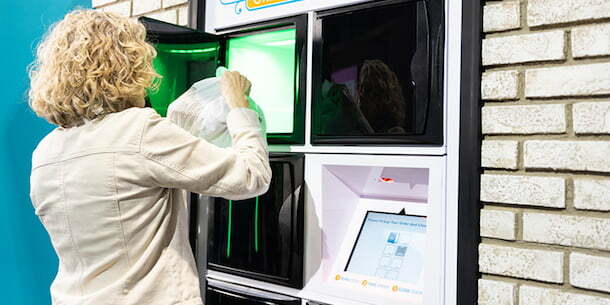
Campuses see explosion in disposable containers as takeout, mobile ordering, delivery become norm

College campuses across the country are facing a growing sustainability challenge as takeout containers and disposable packaging become a permanent part of student life. An article in Bridge Michigan, says that while many of these habits emerged during the COVID-19 pandemic, university officials say they’ve continued long after dining halls fully reopened. Students increasingly rely […]
Stephen Courchane from the University of Minnesota Twin Cities explains how they expedited card issuance by mandating photo upload prior to orientation

Integrating photo uploads with orientation slashes wait times by 95%

Many campus card offices struggle with the same challenge: getting large numbers of students through orientation without creating long lines and bottlenecks. Stephen Courchane, Director of the U Card Office at the University of Minnesota Twin Cities, explains how his office tackled the issue. They did it by partnering with the orientation office to make […]
Flags hanging on building at NYU, site for ColorID Identity Summit 2026

ColorID Identity Summit to take place at New York University, July 14-15

On July 14-15, the New York University Kimmel Center will be the location for this year's ColorID Identity Summit. The event agenda explores the latest in identity management, mobile identity, and advanced credential technologies. Ideal attendees include professionals from higher education, healthcare, enterprise, and other vertical markets who are responsible for identity and credentialing at […]
CIDN logo reversed
The only publication dedicated to the use of campus cards, mobile credentials, identity and security technology in the education market. CampusIDNews – formerly CR80News – has served more than 6,500 subscribers for more than two decades.
Twitter

Great inverview on the Public Key Open Credential (PKOC) standard with ELATEC's Jason Ouellette, Chairman of the Board for the @PSIAlliance.

Attn: friends in the biometrics space. Nominations close Friday for the annual Women in Biometrics Awards. Take five minutes to recognize a colleague or even yourself. http://WomenInBiometrics.com

Load More...
Contact
CampusIDNews is published by AVISIAN Publishing
315 E. Georgia St.
Tallahassee, FL 32301
www.AVISIAN.com[email protected]
Use our contact form to submit tips, corrections, or questions to our team.
©2026 CampusIDNews. All rights reserved.