Card, mobile credential, payment and security

The European Campus Card Association (ECCA) is spearheading a cross-border digital student ID project in Europe that would enable holders to register, buy products and perform other tasks faces significant red tape and legal hurdles, according to a recent report. But project backers hope to make the new digital ID available by 2025.
The ECCA has released its “Student eID Framework Proposal” document, which serves as a summary of the project and provides a rough roadmap detailing the project’s next steps.
“The European Student Card is one of four flagships of the European Commission to make universities more connected across the EU,” says Sinead Nealon, executive director of the ECCA. “The commission as part of its strategy for universities urges a wide use of the European Student Card for all mobile students to facilitate access to transnational mobility at all levels across Europe.”
Use cases for the proposed digital ID would cover a variety of tasks, according to the report. For instance, cardholders could use the new ID form to make online purchases, with security provided by what the report called a “trusted interoperable and an easy-to-use form of eID and authentication.”
The new European student ID also could bring more efficiency to university life by replacing what the report called “a multiplicity of student identities in HEIs, which are required for the diverse range of academic and non-academic services both on and off campus.”
The new card will also enable the transfer of information between students and their colleges and universities, along with building access, electronic signatures and cloud printing, according to comments from stakeholders and workshops included in the report.
Even as use cases for the student ID are mapped out, the project still faces challenges, such as meeting European-wide privacy standards along with national laws that govern security certificates and electronic signatures.
The potential project could also benefit from greater exposure, as evidenced by the results of a student ID survey including in the report. That poll found that 24% of respondents from higher education institutions, 70% of student respondents and 28% of service providers were not aware of the digital ID project.
Even so, most respondents across all categories said they thought colleges and universities will agree “on a solution to make the European eID available by 2025.”
So what format will this new digital student ID take?
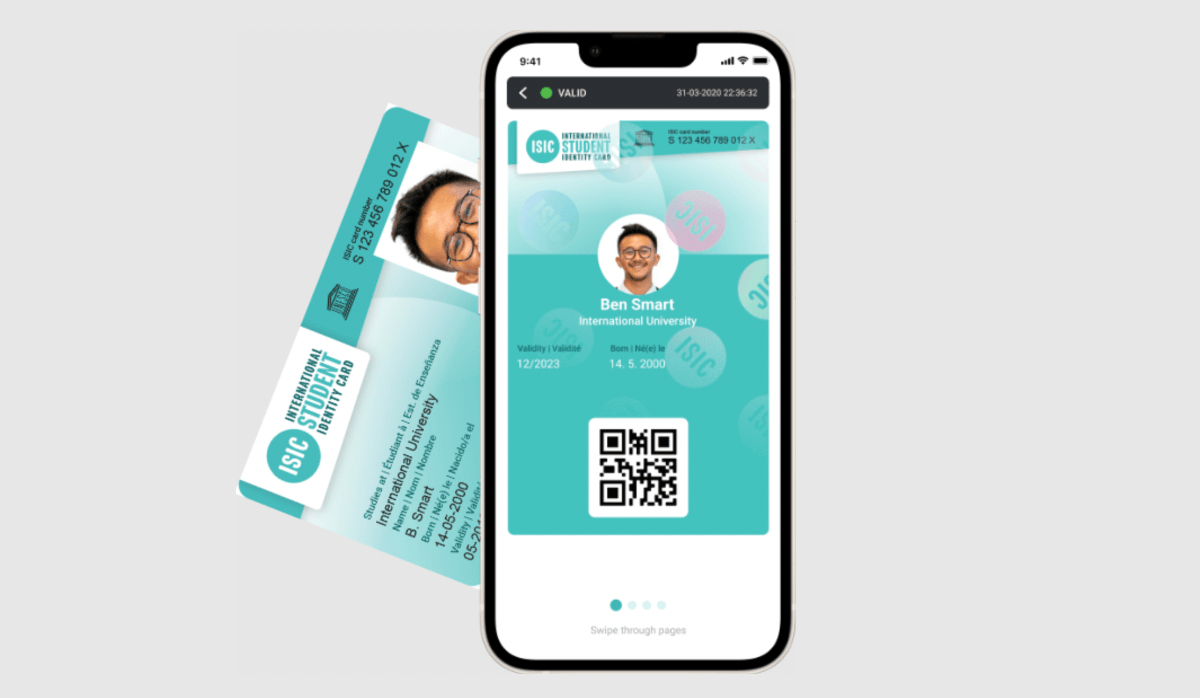
Students, schools and service providers all favor a hybrid card system, with diminishing levels of support for mobile/digital devices only, and then physical cards only, according to the survey.
Comments from various workshops and stakeholders included in the ECCA report also lean heavily toward a hybrid scheme, with biometrics, NFC and host-card emulation among the technology candidates.
The report, in its framework recommendation, reinforces the role of the plastic card, stating: “The physical ID card will continue to be required. However the use of a physical ID card in a hybrid system together with mobile devices should be promoted, as this is the most favored option with HEIs and students.”
Other parts of the recommended framework include:
The report remains unclear about what card technology vendors might take part in this effort.
Comments from workshops show at least some disagreement about whether to rely on apps from single vendors, or integrating into existing university and college apps, or how much to build upon existing technologies like Microsoft verifiable credentials or decentralized PKI (blockchain).
The report concludes by calling for an initial pilot system spanning three or four countries, as proponents push for the larger goal of a 2025 go-live date.
“Recommendations resulting from the various activities of this project provide a sequence of important requirements for consideration and evaluation, so as to achieve a high level of acceptance, collaboration, and positivity from the stakeholders for the concept of a European student card due to be implemented by 2025,” says Nealon.