Card, mobile credential, payment and security
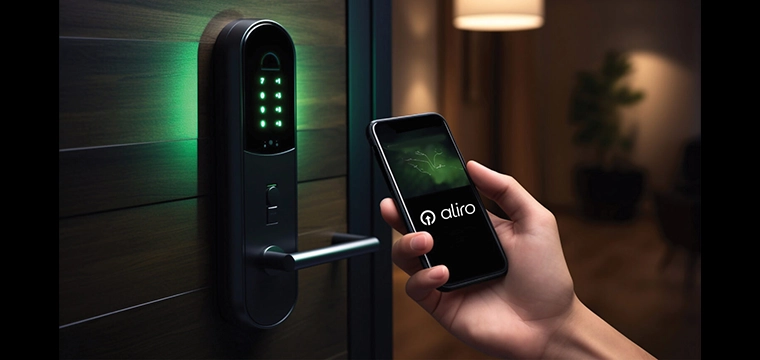
Though in its infancy, new protocol aims to create a universal standard for smart locks and mobile credentials
A new standard is here for smart locks and digital keys, but there are major questions about the impacts of Aliro in higher education. Launched in spring 2026, Aliro 1.0 was created by the Connectivity Standards Alliance (CSA) to move access control and mobile credentials away from propriety solutions to a new universal protocol.
This is not the first move toward interoperability systems from the CSA. The group previously released the Matter standard for smart home connectivity. Aliro is part of their wider effort to standardize digital keys from residential to commercial settings.
What sets Aliro apart is the lower barrier to implementation, consistent experience across devices, personal security, and industry collaboration. This is due to support from the world’s largest mobile wallet providers – Apple, Google, and Samsung. All have committed to supporting the standard, allowing Aliro-certified locks to be used with digital keys in any mobile wallet or smart device.
Apple, Google, and Samsung committed to supporting the standard, allowing Aliro-certified locks to be used with digital keys in any mobile wallet or smart device.
“Aliro is solving the fragmentation that has held back digital key adoption, replacing it with a single interoperability standard built through Alliance Member collaboration,” says Tobin Richardson, President and CEO, Connectivity Standards Alliance. “By connecting the access control industry directly to leading mobile wallet ecosystems, it delivers a secure, frictionless experience that goes well beyond the front door.”
Aliro doesn’t replace communication methods like Bluetooth or Near Field Communication (NFC). Rather it uses these communication protocols to handle a wider variety – and an interoperable variety – of secure access transactions.
According to the CSA, personal privacy was top of mind in Aliro’s development. It uses asymmetric cryptography, also known as public-key cryptography, to ensure secure, bidirectional communications between credentials and readers.
While it is still very early, proponents say Aliro could have a massive impact on the commercial market for mobile credentials, access control readers, and other smart devices.
In higher education, it could one day streamline implementation while affording institutions the flexibility to switch between compatible products from a variety of vendors.
For a university, postponing a system upgrade in anticipation of widely-supported Aliro availability would be a gamble.
Existing smart locks and access control readers do not currently support the standard and most are likely incapable of retrofitting to support it. This means new hardware from participating vendors will be required.
Because of this, while the 1.0 standard is a major accomplishment, it is still in its infancy.
The initial use cases will be in smart home applications, but it is not likely to be a near term solution for large scale mobile credential or infrastructure implementations.
Postponing a system upgrade in anticipation of widely-supported ecosystem for Aliro in higher education would be a gamble.
Still, some lock manufacturers are reported to be in the process of incorporating Aliro into their products, but these devices will need to be fully certified before use.
The CSA says that Apple, Allegion, Assa Abloy, Aqara, Google, HID, Kastle, Kwikset, Last Lock, Nordic Semiconductor, Nuki Home Solutions, NXP Semiconductors, Qorvo, Samsung, and STMicroelectronics will be among the first to achieve Aliro 1.0 certification.
Read more about Aliro 1.0 here, and access the full specification documents.