Card, mobile credential, payment and security
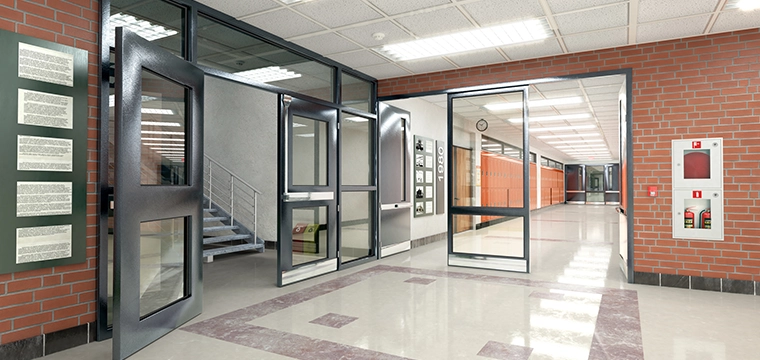
Electronic access control and compartmentalization strategies offer an extra layer of defense during emergencies
A security threat has breached the exterior doors of a campus building – what now?
In a modern security environment, electronic access control (EAC) can quickly, remotely close and lock doors to secure specific areas. This only works, however, at the enabled access points.
Interior doors strengthen campus defense if an exterior door has been left unlocked or been otherwise compromised. “Together, these layers can slow an intruder’s progress, protect evacuation paths and create more manageable zones for responders,” writes Ken Cook, director of National School Safety and Advocacy at Allegion, for Campus Security Today.
Compartmentalization, also known as compartmentation, refers to the creation of indoor zones designed to provide multiple layers of defense in emergency situations. Compartmentation is often used as a barrier to slow the spread of fire and smoke, but it can be helpful for any type of threat containment.
By replacing physical keys with modern credentials, facilities can be split into secure pockets, each with a different tier of access.
In the report, Compartmentalization for Life Safety - The Role of Fire Doors and Secured Access During Crisis Events, the Partner Alliance for Safer Schools (PASS) explains that institutions use doors for these purposes in many ways:
EAC is a key tool to enable compartmentation. By replacing physical keys with modern credentials, facilities can be split into secure pockets, each with a different tier of access to meet varying needs. This helps mitigate the spread of active threats.
Administrators can designate specific permissions allowing groups – students, faculty, staff, even temporary visitors – access to different zones. EAC systems also make it easy for campus security to override different protocols for emergency responders. Additionally, every access attempt is tracked, creating audit logs that can improve understanding of campus movement patterns that can be invaluable when building emergency response plans or investigating security incidents.
In addition to hardened interior door hardware and electronic access control techniques, special glass can withstand a brutal physical attack from an intruder for over four minutes, according to ASSA Abloy.
One concern with the adoption of compartmentation doors is the potential for delay in movement for emergency personnel during a crisis.
To prepare for operational challenges, the Partner Alliance for Safer Schools suggests integrating “dual-priority safety design using strategies like master access solutions, smart integration, clear way finding and mapping, and training and drills with responders.” Emergency overrides can be implemented, and administrators can coordinate credential solutions with first responders.
Electromagnetic hold-open devices use magnets to keep doors open during normal building occupancy but enable remote close and lock capability during emergencies.
If not implemented properly, multiple interior doors could potentially be an inconvenience during normal daily operations. To address this, Allegion’s Cook suggests that electromagnetic hold-open devices be installed to retain an ease of access.
“These devices use magnets to keep the doors open during normal building occupancy, allowing unobstructed movement through hallways,” he explains. After triggering an alarm, the magnets release automatically to close and lock the doors.
Students want to feel safe without feeling imprisoned, and tiered zones help restrict access to inner spaces while leaving public areas more freely accessible.
Ease of scalability keeps EAC relevant as campuses expand evolve – adding new doors, updating access levels, and remotely modifying user permissions. Interior compartmentation supports remote lockdowns and centralized monitoring by creating manageable zones. Combining the two – EAC and compartmentation – helps a campus create a comprehensive and intelligent security net.