Campus ID News
Card, mobile credential, payment and security
FEATURED
PARTNERS
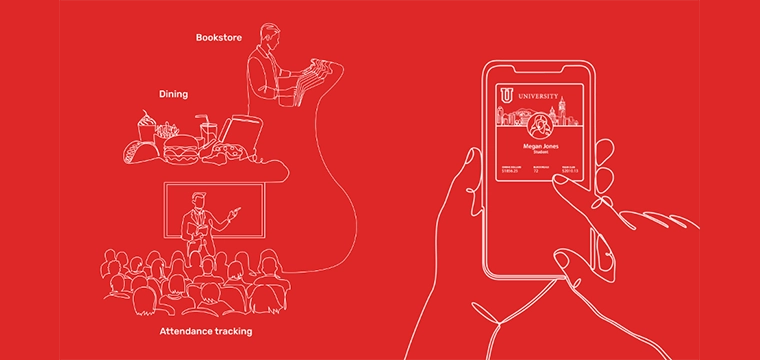
illustration of hand holding phone

Your Campus Went Mobile. Now What?

Contributor   ||   May 15, 2026  ||   , , ,
Christine Quinn, Vertical Lead, Higher Education, rf IDEAS

The first wave of mobile credential adoption is behind many institutions. Mobile IDs are live, students are tapping their phones at residence hall doors, and card offices are fielding fewer walk-ins during orientation.

But for many campuses, that progress has stalled at the door. The broader campus ecosystem – dining, recreation, printing, events, administrative systems – still runs on plastic cards, separate workflows, or manual processes.

The question campuses are now asking isn’t whether mobile credentials have a place across their institution. It’s what it actually takes to get them working everywhere they should. That answer is part infrastructure, part planning, and part prioritization.

Taking stock of your campus access ecosystem

Before expanding mobile credentials, it helps to map the full landscape of where credentials are used and where they need to be used.

Physical access touchpoints like doors and building gates represent just one layer. Equally important is the logical access layer: the systems and services where a credential authenticates a transaction or verifies identity.

campus imagePhysical access touchpoints like doors and building gates represent just one layer. Equally important is the logical access layer: the systems and services where a credential authenticates a transaction or verifies identity. Think POS terminals at dining halls, secure print stations, event check-in, library services, and shared computing labs. Vending, parking kiosks, and athletic event management often surface during migration planning as well. These systems may not have been part of the original access conversation but rely on the campus credential all the same.

A useful starting exercise is an access audit: catalog every location where a credential is used today and assess the current technology at each point. That inventory becomes the foundation of a realistic expansion roadmap, revealing dependencies that would otherwise create surprises mid-deployment.

What makes a reader campus-ready

One of the most practical questions in mobile credential expansion is whether your readers can support it. Not every reader deployed for door access is suited for the full range of campus use cases. Understanding the hardware layer matters before committing to an expansion plan.

Campus environments require readers across a spectrum of deployment contexts. A dining hall POS terminal has different constraints than classroom attendance, a temporary event, or a shared computer lab. The hardware layer needs to flex accordingly. Several characteristics are worth evaluating:
  • Credential compatibility: Does the reader support multiple credential types – magstripe, low-frequency proximity, high-frequency smartcard, and mobile credentials – from a single device? Multi-technology readers are especially valuable during transition periods when campuses support both physical and mobile credentials simultaneously.
  • Form factor flexibility: A surface-mounted reader works for a fixed installation. A compact USB reader enables deployment at temporary setups, kiosks, tablets, and mobile devices. The ability to use different form factors without learning entirely new configuration workflows reduces deployment overhead and speeds time to value.
  • Mobile wallet support: As Apple Wallet and Google Wallet become prevalent mobile credential platforms in higher education, readers engineered to support both help future-proof deployments against shifts in ecosystem preferences. Rather than being tied to a single wallet provider, readers that support all leading platforms offer more flexibility for institutions.
  • Configuration consistency: Reader configuration tools that work consistently across a portfolio reduce the learning curve and make scaled rollouts manageable for IT teams. So, a reader going into a lab can be set up the same way as one going into a dining hall.

Prioritizing where to expand

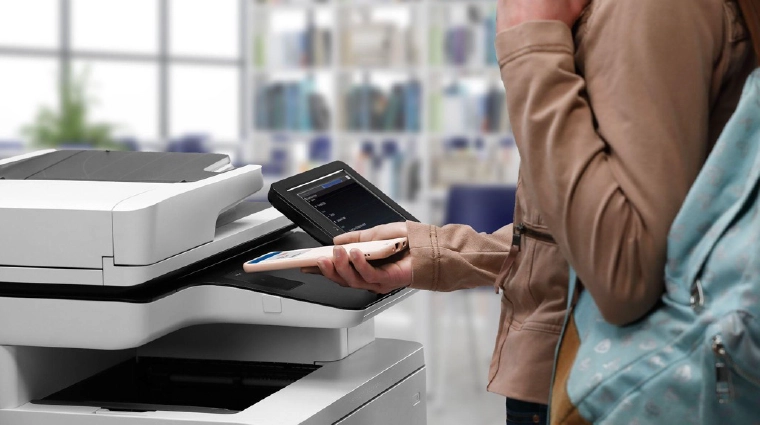
woman at printer with phoneOnce an access audit is complete and the hardware layer is understood, the next question is where to begin. A few criteria help prioritize:

  • Volume and visibility: High-traffic locations like dining halls, bookstores, and recreation centers create the most daily touchpoints with students and staff. When mobile credentials work there, users notice quickly and so does the return on the investment.
  • Infrastructure readiness: Some locations may already have readers capable of supporting mobile credentials with a configuration update. Others require hardware replacement. Starting where the lift is lower allows campuses to demonstrate results before committing to full-scale deployment.
  • Stakeholder pain points: Departments experiencing the most friction like frequent card replacements, high transaction volumes or manual check-in processes are often the most motivated to adopt and support a transition. Partnering with those departments early builds organizational momentum for broader expansion.
  • Security and compliance drivers: Secure printing and workstation authentication use cases often carry specific security requirements that justify early prioritization. Credential-based authentication in these environments reduces shared password reliance and supports stronger audit trails.
  • Building the Roadmap

Campus-wide mobile credential expansion rarely happens in a single deployment cycle, and it shouldn’t. A phased roadmap tied to the criteria above allows teams to learn and adjust before scaling. A few considerations for the planning process include:

  • Work cross-functionally from the start: Dining, IT, facilities, the card office, and auxiliary services all have a stake in how access evolves. A working group that includes these stakeholders surfaces integration requirements early and prevents the kind of late-stage surprises that slow rollouts.
  • Maintain compatibility during the transition: During any expansion, some users will still rely on physical credentials. An expansion strategy that maintains support for multiple credential types reduces friction and improves adoption rates among users who aren’t yet on mobile.
  • Document configuration decisions: As new locations are added, standardized reader configuration processes make future deployments faster and reduce dependence on institutional knowledge held by a small number of individuals. Consistency in how readers are set up across campus also simplifies troubleshooting when issues arise.

One use case at a time

The campuses realizing the most value from their mobile credential investments share a common trait: they have a clear picture of their access ecosystem, a hardware layer capable of supporting campus-wide deployment, and a prioritization framework that builds momentum one use case at a time.

A student whose phone unlocks a residence hall door should be able to use that same credential at the dining hall, the print station, the recreation center, and events.

Mobile credentials have earned a place at every campus access point. A student whose phone unlocks a residence hall door should be able to use that same credential at the dining hall, the print station, the recreation center, and events. Getting there is largely a planning and infrastructure challenge. The technology is ready. The question is how methodically your campus is building toward it.

Learn more about how flexible, interoperable access strategies are helping institutions create freedom to campus experiences at rfideas.com/industries/education.

Subscribe to our weekly newsletter

RECENT ARTICLES

Audra Forsberg, Wayne State University headhot
Jun 04, 26 / ,

Preventing fraud in campus card programs

In this episode of CampusIDNews Chats, Audra Forsberg discusses a growing challenge facing campus card offices – fraud risks created by misplaced trust and weak internal controls. While trust is necessary in any organization, Forsberg emphasizes that trust without oversight can create opportunities for both internal and external fraud. Forsberg shares examples of internal fraud […]
ISG Atrium partnership

ISG’s network of dealers to offer Atrium credential solutions

Atrium Campus and the Identification Systems Group (ISG) announced a new partnership that will enable ISG member companies to promote Atrium’s cloud-native campus credential solutions in higher education and other market verticals. ISG is a North American network of identification, security, and identity-management solution providers that has served customers for more than 40 years. Initially […]
Alex Khamu, global business development manager, Unicard Systems interview with CampusIDNews
May 28, 26 / , ,

Unicard's ID solutions and self-service card issuance kiosks hit U.S.

  In this episode of CampusIDNews Chats, Alex Khamu, Global Business Development Manager at Unicard Systems, shares how the company is helping colleges and universities modernize campus card issuance through cloud-based software, online photo submission, digital IDs, and self-service kiosk technology. With more than 40 years in the industry and a strong presence across Australia, […]
CIDN logo reversed
The only publication dedicated to the use of campus cards, mobile credentials, identity and security technology in the education market. CampusIDNews – formerly CR80News – has served more than 6,500 subscribers for more than two decades.
Twitter

Great inverview on the Public Key Open Credential (PKOC) standard with ELATEC's Jason Ouellette, Chairman of the Board for the @PSIAlliance.

Attn: friends in the biometrics space. Nominations close Friday for the annual Women in Biometrics Awards. Take five minutes to recognize a colleague or even yourself. http://WomenInBiometrics.com

Load More...
Contact
CampusIDNews is published by AVISIAN Publishing
315 E. Georgia St.
Tallahassee, FL 32301
www.AVISIAN.com[email protected]
Use our contact form to submit tips, corrections, or questions to our team.
©2026 CampusIDNews. All rights reserved.