Campus ID News
Card, mobile credential, payment and security

FEATURED
PARTNERS
slider biometric art 1 1

'Bolt-on biometrics' for the college campus

Chris Corum   ||   Nov 08, 2004  ||   ,

Whether viewed as sci-fi, Orwellian, or other, most observers agree that our day-to-day use of biometrics will increase rapidly over the next few years. On campus, the reality is that biometric implementations are likely even more immediate. That means you should get involved, or at least pay attention.

In the context of campus programs biometrics are simply any measurable characteristics of your body that can be used as an identifier. Most people view the biometric as an extension of the numerous identities already used on campus. As programs strive to provide additional security and convenience, biometrics offer new set of solutions.

Several biometric vendors have realized that the easiest path to success comes from adding to, rather than replacing existing systems. This is especially true in security applications where infrastructure is costly and difficult to change. They developed biometric components designed for integration with your current infrastructure. While not quite plug and play, these offerings do significantly lower barriers to implementation.

With that in mind,  here are three examples for biometric implementations that can let you realistically begin deployments on your campus. We call them bolt-on biometrics because they can likely attach to your current campus card infrastructure with relative ease.

Taking the biometric test drive

Physical security is a great place for initial biometric exploration. Even if your campus card or identity program does not work directly with security today you still can have a role and benefit from early work with bolt-on biometrics.

Before your biometric test drive, pick your population. Biometrics shine for small population, high security applications. Your campus may be host to a high profile or high-risk lab with very limited access. Or likely you have a secure computing facility that requires tight control. If you do not already have groups or areas that have expressed interest in biometrics, these offer some possible test beds.

The test drive basics:

  • Choose a small test population that has immediate benefit from the biometric implementation.
  • Use that experience to help formulate your institutional biometrics policy.
  • Position the card program as the "enrollment" station for establishing biometric identity.
  • Prepare the card program to utilize the biometrics for other applications.

Once you have a likely location, pick your biometric. For brevity’s sake, this discussion covers three specific options. Each was chosen because it can attach to a wide range of access control systems without substantial software integration-thus the concept of bolt-on biometrics. Of course, your security provider may have other components available and you should consider all your options.

Each of our bolt-on biometrics provides multiple methods of communicating with access control systems, or even operating as independent access control systems. Several different biometrics are being aggressively promoted for both security and transactions with technology from dozens of vendors. Two popular choices are finger scanning technology from Bioscrypt and hand geometry solutions from IR Recognition Systems.

Pages: 1 2

|| TAGS:
Subscribe to our weekly newsletter

RECENT ARTICLES

Rosty Chen, Michigan State University prepares for a video interview
Sep 04, 26 / ,

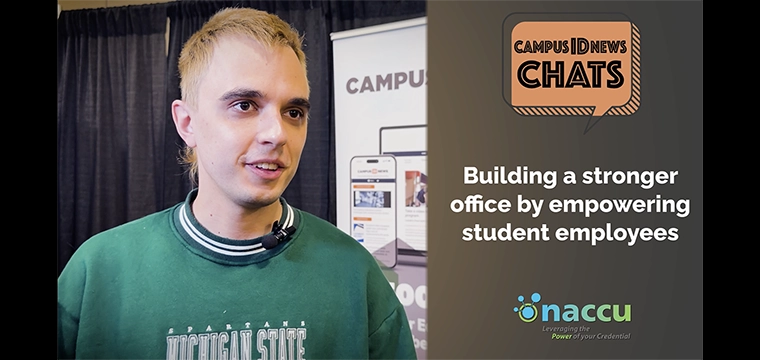
MSU builds stronger campus card office by empowering student employees

When Rosty Chen’s campus ID office at Michigan State University lost its manager during a hiring freeze, the remaining staff had to absorb the work. The situation became even more difficult when another full-time employee left, further reducing the team from four people to three. Instead of relying only on the remaining staff to carry […]
Mother and daughter working at a computer
Aug 26, 26 / ,

PayPal and Venmo bring new tuition payment options to campus

At Bellarmine University, Butler University, and Kansas State University, students and parents can pay tuition with a method they commonly use for other daily transactions – PayPal and Venmo. This is possible because of recent integrations between PayPal and three leading campus payments solution providers. Collectively, the three partners – TouchNet, Illumia, and Nelnet Campus Commerce […]
Titus Johnson from Nova Southeastern University at an interview
Aug 25, 26 / ,

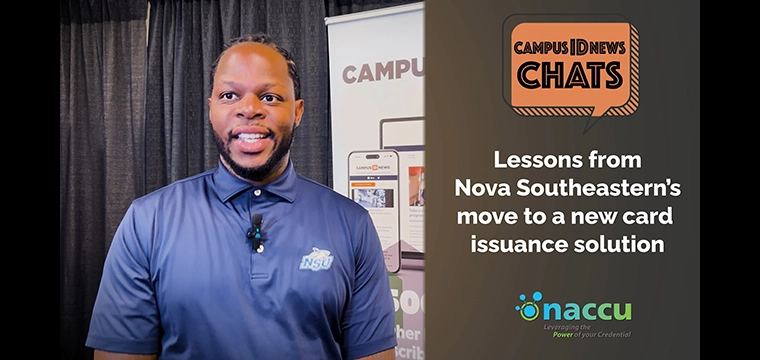
Lessons from Nova Southeastern’s move to a new card issuance solution

Titus Johnson explains that Nova Southeastern University's transition to a new cloud-based card production system was a natural evolution of its long-standing relationship. For a decade, Nova has worked with Vision Database Systems so moving from the company’s older IDMS solution to its new EliteID product was an obvious choice. Because of that partnership, the […]
CIDN logo reversed
The only publication dedicated to the use of campus cards, mobile credentials, identity and security technology in the education market. CampusIDNews – formerly CR80News – has served more than 6,500 subscribers for more than two decades.
Twitter

Great inverview on the Public Key Open Credential (PKOC) standard with ELATEC's Jason Ouellette, Chairman of the Board for the @PSIAlliance.

Attn: friends in the biometrics space. Nominations close Friday for the annual Women in Biometrics Awards. Take five minutes to recognize a colleague or even yourself. http://WomenInBiometrics.com

Load More...
Contact
CampusIDNews is published by AVISIAN Publishing
315 E. Georgia St.
Tallahassee, FL 32301
www.AVISIAN.com[email protected]
Use our contact form to submit tips, corrections, or questions to our team.
©2026 CampusIDNews. All rights reserved.