Card, mobile credential, payment and security

Expansion raises questions about revenue share, liability, merchant participation, and more
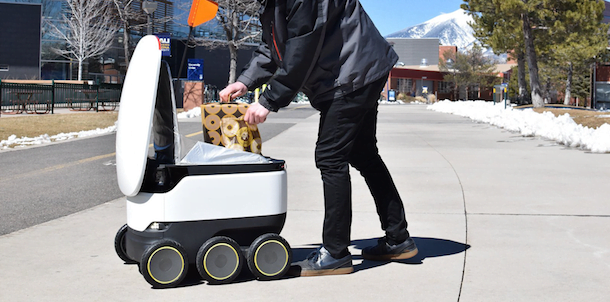
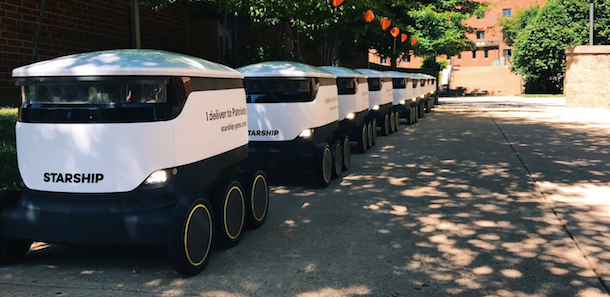
Apparently, what happens in Vegas doesn’t always stay in Vegas, at least when it comes to autonomous food delivery vehicles. The Clark County Board of Commissioners voted to allow the robots – previously confined to the University of Nevada Las Vegas campus – to make deliveries in surrounding off-campus areas.
It may not seem like a big deal, but the decision could have ramifications for other campuses and cities across the country.
UNLV has been seeking permission to use their on-campus dining operation’s fleet of robots to deliver food to a series of nearby residential complexes, but regulations in Clark County, and presumably in most jurisdictions across the country, don’t allow it. They may not explicitly forbid it in statute but crossing the literal and figurative lines almost certainly is a no go.
It is true that this is one campus, one community, and a limited geographic expansion. But we all know single steps often open floodgates. Years from now our institution’s robot fleet may be serving our entire community, and that could be a great thing ... or not.
To address the question, the County Commission added the issue to their meeting agenda to consider setting policies that, if met, would allow robots to venture onto city sidewalks.
Specifically, the agenda item read:
Conduct a public hearing and approve, adopt, and authorize … Personal Delivery Device Operators; providing for the licensure of personal delivery devices; establishing license application requirements; providing for business license fees; and providing for other matters properly related thereto.
Before the measure was unanimously approved, an amendment specified that robots could not reduce the width of the sidewalk to less than 48 inches or reduce accessibility standards except when actively crossing an intersection or crosswalk.
According to an article in the Las Vegas Sun, “the ordinance allows the devices to carry food and nonalcoholic beverages to students and staff … saving customers from having to walk across Maryland Parkway on hot days or at night to get food, which was a safety concern.”
Constance Brooks, vice president of government and community relations at UNLV, added that it will “provide us with more safe and accessible food options for students.”
This decision was possible at the county level, because a law passed last year by the Nevada Legislature empowered local governments to decide on the issue for their jurisdiction.
Clark County added restrictions including:
The move opens an array of opportunities, questions, and concerns for other campuses utilizing – or considering – autonomous delivery.
It is true that this is one campus, one community, and a limited geographic expansion. But we all know single steps often open floodgates. Years from now our institution’s robot fleet may be serving our entire community, and that could be a great thing ... or not.
Will campus vehicles deliver to people not connected to the university? Will they deliver food from off-campus restaurants as well as on-campus dining facilities? How will revenue sharing work between the campus, robot provider, and local government? Where does the liability shift start and stop?
It is likely that some of these issues are still undetermined at UNLV and in Clark County … but everybody goes to Vegas to try their luck.
Ironically, because of road construction in the area the robots are unlikely to leave campus until sometime in 2026. This leaves plenty of time for all parties to see if and how other communities address the issue.