Card, mobile credential, payment and security
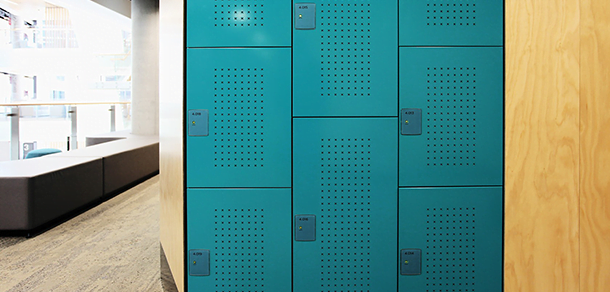
The university knows the student will be at the university for four years, for instance, and can close the locker at the end of the student’s last term. At the start of each new term, the university sends over a list of new and current students. “So the whole integration is completely automatic,” Pichler says.
Existing smart locker deployments at universities in other markets have also helped identify certain needs for new features and functions for the locking system. Added features such as alarms can also help justify higher locker rental fees, allowing institutions to make more revenue from their smart locker investment.
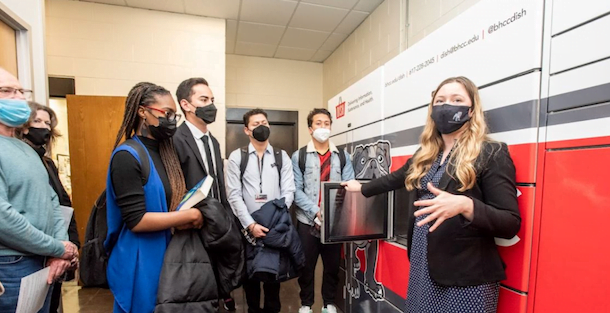
At Northeastern University in Boston, lockers include LED status lights, acoustic feedback and clear labeling to identify each locker’s exact location in the university’s intricate underground tunneling system
LED lights and USB charging ports are among the recent features that Gantner is adding to its smart locker systems. With more devices like smartphones and tablets relying on batteries that need to be charged daily, there’s been a greater demand for locks with USB charging ports.
“People want to charge their devices in lockers,” Pichler says.
At Northeastern University in Boston, Gantner’s most recent U.S. higher education deployment, lockers include LED status lights, acoustic feedback and clear labeling to identify each locker’s exact location in the university’s intricate underground tunneling system.
Smart lockers can also create added functionality for student ID cards. Pichler points out that university campus card offices are looking for more applications they can bring to ID cards to make them more valuable.
“They want to get the most out of the investment in contactless campus card technology to make the university experience as frictionless as possible, and lockers are another great avenue to do so,” Pichler says.
Northeastern University students can use their ID cards for access to dorms and lockers, as well as for cashless payments for dining, vending machines and laundry services.
Universities around the globe that have implemented smart lockers have experienced benefits including simplified locker management, lower operational costs, control of locker use, transparency, security and differentiation.
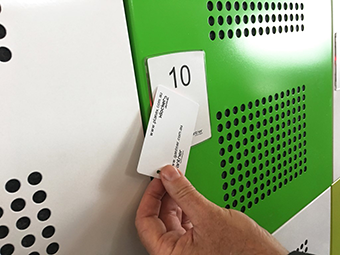
Gantner has deployed 875 smart lockers at Western Sydney University, all controlled via a single management solution.
Pichler says universities have found creative ways to apply those benefits to a number of situations.
At a German university where Gantner had deployed smart lockers, the school’s maintenance team collected automated reports every morning of which lockers overstayed the 24-hour use period. The team then uses that information to notify students, clear out the overstayed lockers and put the contents behind a lost-and-found counter.
Because networked lockers can provide reports of when and how often a student has used a locker, institutions can take advantage of the system’s transparency to obtain more information in case there is a suspicious package in a locker or if a unit is damaged.
Universities have also used the technology to deactivate a student in the system for attempting to open several lockers within a short amount of time, or to set up text messaging in case a locker alarm goes off.
All of these features increase value and create the unique benefits of smart lockers in education.