Card, mobile credential, payment and security
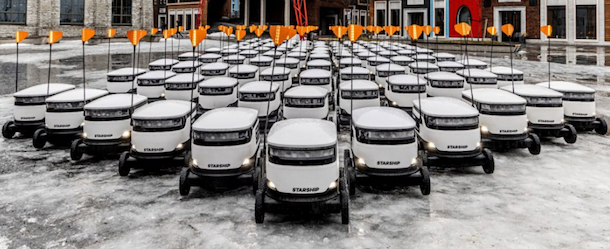
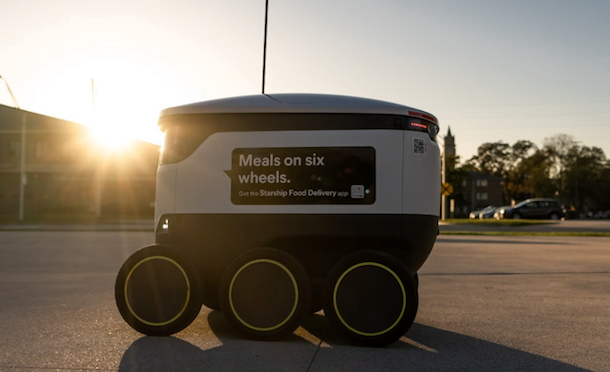
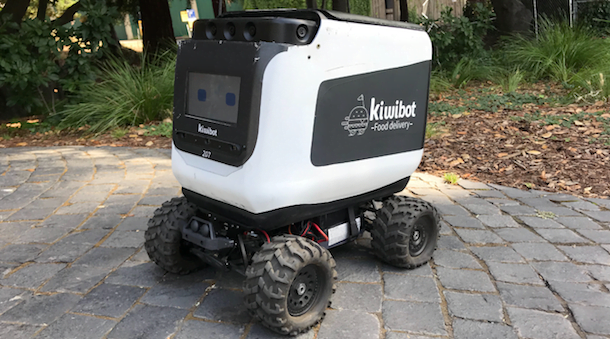
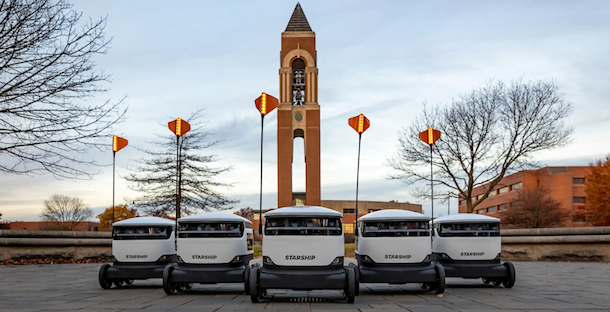
A new study conducted by a team of researchers at Northern Arizona University is examining instances of conflict between delivery robots and pedestrians in an attempt to improve delivery infrastructure going forward. Delivery robots have become an undeniably popular — and viable — service for colleges looking to expand their dining services reach. With Northern Arizona being one of the earliest adopters of the technology, having deployed a fleet of delivery robots in 2019, the Flagstaff, Ariz. campus makes an ideal research location.
According to an official university release, the lead author of the research says this work is the first of its kind, examining how "sidewalk autonomous delivery robots" impact pedestrian and cyclist safety. The research, in part, highlighted a need for more "deliberate decision-making regarding the routing of robots around college campuses."
The research suggests planning decisions and facility management practices that are capable of adapting over time will be critical to avoiding incidents between delivery robots and pedestrians.
“With the continued emergence of these delivery services on college campuses, which have expansive sidewalk networks and a technological-savvy consumer market, we believe this work can help inform other campuses who have recently or are considering an introduction of these services to ensure their safe operation in shared-use environments,” says lead research author, Steven Gehrke.
The team made their observations and based its research on the Northern Arizona campus. The research team deployed cameras at 10 sites across the NAU campus with the goal of observing the robots' interactions with pedestrians over a one-week period. From that footage, the team isolated human-robot conflicts, determining whether the pedestrian or the robot entered the "conflict zone" first and what, if any, evasive action took place.
The research team classified robot-pedestrian interactions as "moderate," "dangerous" or "not a conflict." Interactions were considered dangerous if a pedestrian and robot crossed a shared point of a pathway before 1.5 seconds elapsed. The team recorded 12 instances when the elapsed time was zero seconds, indicating that a collision had occurred.
According to the research team, a majority of the more serious conflicts occurred when a robot was crossing in front of, or overtaking, a pedestrian on a sidewalk.
Additionally, sidewalk width, the number of intersections, and the number of robots, pedestrians and cyclists in the area all factored into the number of incidents. The researchers' findings showed that sites with narrower sidewalks and more intersections experienced more dangerous interactions.
“Research on the real-world introduction of this technology on facilities shared with pedestrians and cyclists is important for providing practitioners the evidence they need to support programs and policies that ensure the safe operations of these devices in environments with vulnerable roadway users,” says Gehrke.
While the team at NAU admits that more research is required, they believe that the initial data points to a need for delivery robot routes that prioritize parallel travel along wide sidewalks whenever possible to minimize crossing paths with pedestrians. The team also suggests designated order drop off locations at less-trafficked, well-marked sites.
To learn more, the NAU research team's work was published in the March edition of ScienceDirect's Transportation Research Interdisciplinary Perspectives journal.