Card, mobile credential, payment and security
Retrofitting and maintaining existing readers reduces costs and adds flexibility
Josh Bodnar, Director of BuckID at Ohio State University, shares his experience transitioning the university from Transact’s legacy access control system to LenelS2 NetBox.
“A lot of schools are facing the fact that Transact's legacy hardware is going end-of-life and end-of-support, so most of us are looking at what's next,” Bodnar explains.
Creative approaches are allowing Ohio State to extend the life of its existing hardware, save on replacement costs, and phase upgrades strategically.
Ohio State's migration leverages Mercury panels while reusing existing Transact readers, allowing the university to maintain flexibility and reduce costs. “Now is a good time for us to go to Mercury – it is a more open – and if anything changes in the future, we've got a lot of possibilities,” he says.
The project focuses on both upgrades and new installations.
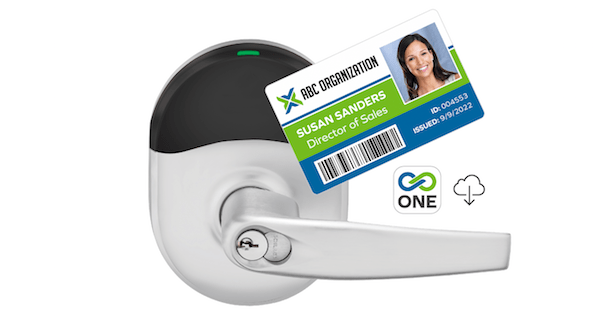
Existing Allegion offline locks that read the magnetic stripe are being retrofitted with new radios and tap heads. This takes an insecure mag stripe offline reader and converts it to an online, wireless contactless reader.
Bodnar highlights the practical benefits of this approach saying it allows Ohio State to extend the life of its existing hardware, save on replacement costs, and phase upgrades strategically.
“We were very fortunate that Transact, Lenel, and Allegion all came to the table to help us figure out how can we get into a new access control system, upgrade what we've got, and make it as painless as we can,” he says.
He also describes these upgrades as an essential step in the path to mobile credentials.
To watch the full interview, click the image at the top of this page.
TRANSCRIPT
I'm Josh Bodnar and I am the Director of BuckID at Ohio State. I've been there six years now. We have multiple access control systems on campus, and I manage one of them.
In student life – which is where Buck ID sits, the residence halls, the rec centers, the student union – those are all in our access control system.
Historically, we used Transact’s legacy door access platform, but we're currently in the middle of a large project to move over to LenelS2 NetBox.
A lot of schools are facing the fact that Transact's legacy hardware is going end-of-life and end-of-support, so most of us are looking at what's next.
We decided to move to Mercury panels. We're reusing the existing Transact readers, at least the newer tap ones. They do have the capability of being OSDP, so we're reusing those readers on our hardwired installations where we have them.
The nice thing is it's becoming a little more open, so in the future, we have the choice of HID’s wired readers, Allegion’s wired readers, and the Transact wired readers that are still out there, in addition to Lenel’s Blue Diamond readers.
So at this point, where it's historically on our old system, we only really have the choice of using Transact proprietary door readers, now we've kind of got that whole ecosystem available to us.
So right now, we're using a lot of what we have just from a cost savings perspective, but it's nice that we've got that all available to us now.
We also like that, you know, now is a good time for us to go to Mercury. The idea is, you know, Mercury is a little more open. If anything changes in the future, we've got a lot of possibilities.
And then Lenel S2 was the right partner for us on the access control side, because they have the ability for us to reuse some of those older Transact panels. So, I don't have to upgrade all my panels in the field right now. I've got a little time.
Now, anything that's in the support, obviously, I don't want to leave it out there past the end of the support date, but I've got another year, year and a half before that comes up. It gives us some flexibility.
So we were very fortunate.
Transact, Lenel, and Allegion all came to the table to help us figure out how can we get Ohio State into a new access control system, upgrade what we've got, and make it as painless as we can.
I'm not going to say it's a painless process, because it's not. But with all those partners involved, they've helped us to make it less painful.
One of the big parts of this project we're doing right now, we had eight buildings that we constructed all at once about 10 to 15 years ago – our North Residential District.
At the time, we put in Allegion’s offline locks, the 8250 series.
As part of this project, we're actually going to take those existing locks, that existing investment, and just upgrade it.
We're able to take the back cover off, put a radio on it, take the old mag head off, put a tap head on it. And now those locks we've had for 12 years now are like a whole new system. They're going to be online. They're going to be tapped as we get ready for mobile.
So that's a big part of what we're doing right now, is trying to position ourselves where mobile could be possible.
I'm very jealous of all my friends and colleagues who have made it there. It's going to take me another couple years, but this is a big step in that direction.
And the ability to just upgrade that stuff.
So in places where we have existing hardware, if we can upgrade it, maybe flash new firmware to it, keep it, leverage that existing investment. 100% of the time, that's what I'm going to do.
When we're looking at new installations, some of it will be, you know, what's availability? We all remember what happened during COVID.
Supply chains, some manufacturers, you know, there were times where HID was back, six to eight weeks minimum, and sometimes months, and then, you know, it would change, and then it's Allegion six to eight months back.
I tend to be agnostic. I have great relationships with all the partners in the space. I think we're very fortunate and higher ed that we have such good partnerships with all the suppliers that are out there.
It's just, who's got what I need right now and what's pricing? The rest of it is what's the application.
If we're building new construction, we're looking at exterior doors or high traffic interior doors, 100% of the time, I'm going to hardwire that. I don't want to have to deal with batteries if I don't have to.
All that can be done as part of a project. 100% of the time, I'm going to go that direction.
It's easier for us. You're not getting into batteries. You don't have to deal with wireless signals and all of that.
But the flip side of that is if we're in a retrofit situation, maybe we're doing a couple of doors, interior doors and office suite, and t's really cost prohibitive to do the whole full line where you're not getting into a door, getting into a frame.
In those cases, that's where we're really looking at wireless locks because they bring that cost way down. If it's a brass key or a wireless lock, I'm going to push us towards the wireless lock in those retrofit situations.
People laugh at me if I say, “it's going to be about $10,000 to put full online access control.” They're like, well, that's funny. No, not going to happen.
A wireless lock can cut that cost in a quarter maybe, maybe a little less depending on if you've got infrastructure in place already.
I'm starting to look at some of the new biometric stuff that's out there. We don't have a huge biometric presence right now. We've got some on our athletic facilities, but it's a lot older biometrics, a lot of fingerprint readers.
I’m really excited about some of the facial recognition. Or facial authentication, I learned that there's a difference there.
I love that facial authentication technology where you can take the ID photo so you're not having to capture a biometric template. You can take a photo you already have and then have the reader recognize the person and build the template on the fly.
I'm really interested in some of that. I'm not sure kind of where we use it yet. Very interested in seeing if our athletic department's open to that. They're kind of on their own system with their own biometrics right now.
I'd love to get them kind of more integrated with the rest of campus, especially if I can tell them, you can get rid of all this biometric profile capture that you're doing now. I've got the photo; facial authentication readers are available. Is this something where we could work together and maybe take them to the next level?
So kind of excited about that.
And then I'm really excited to try and get us in a place where mobile can be possible for us. I mean, the last 10 years, that's kind of been the thing. That's what everyone's working towards.
We've got a lot of legacy stuff and we're starting to finally make some real strides into getting to where we've got the readers that can get us there.