Card, mobile credential, payment and security
Retrofit existing mechanical locks on res hall doors without replacing hardware
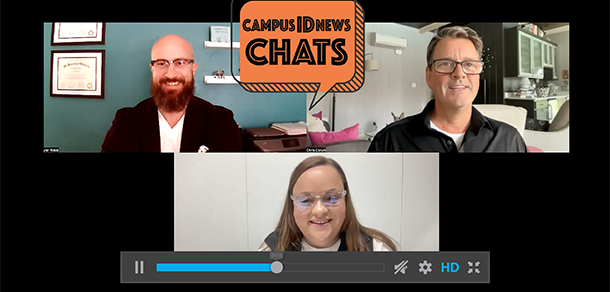
iLOQ offers mortise and deadbolt cylinders that retrofit directly into existing mechanical locks, eliminating the need for wiring, cabling, or batteries. In a recent episode of CampusIDNews Chats, Christopher Chuakay, Sales Manager at iLOQ, discusses how – with iLOQ on campus – complexity is reduced, maintenance is virtually eliminated, and deployment speed increases.
All the existing hardware can stay, and it's an easy retrofit. There are no wires, cables, infrastructure, and no need to change batteries.
“Everything is battery-free, cable-free, wire-free, so implementation is a super easy process,” says Chuakay. “Our smart locking platform lets institutions keep their existing door hardware, replace only the cylinder, and immediately enable smart access.”
A key differentiator of iLOQ’s platform is its use of NFC technology in the user’s smartphone to power the lock. This eliminates the need for batteries or a wired power source, as the lock draws the energy it needs directly from the phone during a tap.
The mobile app powers the lock, reads credentials, and grants access in seconds. This approach ensures continued access even during power outages, blackouts, or emergencies, making the system particularly resilient for campus environments.
Chuakay highlights a major higher ed use case in residence halls, where managing access at move-in and move-out is a persistent challenge. With iLOQ Manager, campuses can issue mobile credentials to students in seconds, set them to expire automatically at the end of the term, and eliminate the need for physical keys.
Beyond doors, iLOQ’s heavy-duty, IP68-rated padlocks support outdoor and extreme-temperature environments, providing audit trails for gates, sheds, and equipment cabinets.
To listen to the full interview, click the image at the top of this page.
TRANSCRIPT
Hello everybody, I'm Christopher Chuakay, one of the sales managers here at iLOQ. iLOQ is the first and only battery-free, wire-free, smart locking platform.
What we're bringing to the market here in the higher education sector are our mortise cylinders, deadbolt cylinders, and our padlocks. Everything is battery-free, cable-free, wire-free, so implementation is a super easy process.
You to take one of these mortise cylinders or a deadbolt cylinder and retrofit it into your existing key mechanical cylinder. Then, simply open your app, tap the lock, it'll locate the NFC, power it instantly, and now you can have access to your room.
Simple as that.
iLOQ padlocks are great for gates, equipment sheds, and cabinets where you want to get verification and access logs of who is tapping to open.
Most of the times, people ask us, how do you do battery-free? How do you do something without any wires or cables?
We're actually using the power of what everybody else carries around all the time, your cellphone.
So you have your app, we're going to try to open the lock, we basically tap, it's going to power the lock, read your credentials, and now we turn, and we're in.
The biggest thing that most people struggle with when implementing access control or any type of smart locking solution is the implementation.
With ours, it's a mortise or deadbolt cylinder.
All the existing hardware can stay, and it's an easy retrofit. There are no wires, cables, infrastructure, no need to change batteries after you install it, so it's really maintenance-free.
One of the interesting use cases in higher education are residence halls. The biggest thing is how do we move the students in at the start the semester and how do we move them out at the end of the semester?
With iLOQ on campus, our iLOQ Manager system, let's you set up these digital keys or mobile credentials sent for the students at the beginning of the semester. It's downloaded on their mobile device really easily, 30 seconds, and then at the end of the semester, it automatically expires.
So now, a resident can go onto their door, they can tap to unlock, they can have the freedom to just leave their dorm with just their cell phone. Now you've gone to mobile credentials.
We've also got some interesting use cases with padlocks.
These can be great for gates, equipment sheds, cabinets, things like that, where you want to get verification that someone's tapping to open. You know who was the last one in there, who was the last one to lock it up, so you've got that validation, those access logs now.
These are good for outdoor uses, so if you've got extreme temperatures like cold, wind, or rain, these will hold up to minus 40, plus 80, they're IP68 rated, it's really heavy duty stuff.
The best part about it is, again, is no maintenance. I've talked to a lot of people today that say they'll have a hurricane or a blackout where there's no power, and they can't get into their rooms because they're wired or networked.
With our system, it's literally just plug and play, leave it in there, and use your phone to actually power on the lock and the device. You'll always be able to get access.
If you're curious to learn more, visit us at iLOQ dot com, you can reach out to your local partners.