Card, mobile credential, payment and security
Proposal tying swipe donations to food pantry funding passes Senate, stalls in House
The bill that would enable students at virtually all Virginia universities to donate their unused meal plan credits fell just short of passing this year. State lawmakers voted to continue debating the proposal – supported by the nonprofit Swipe Out Hunger organization – in the 2027 session.
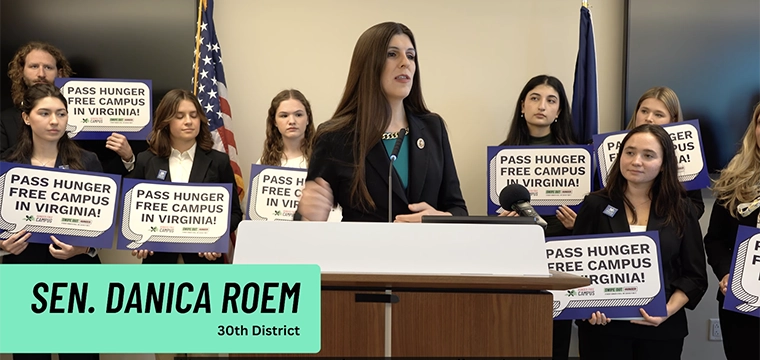
The bill was introduced by Senate Democrat Danica Roem and would have allowed students to voluntarily donate their unused meal swipes. The meals could then be distributed to other students for redemption at campus dining halls or on-campus food pantries.
The proposed legislation hoped to build on Roem’s 2025 legislative success that established the Hunger-Free Campus Food Pantry Grant Program. It provides funding to support campus food pantries at public and qualifying private higher education institutions in the state.
The new bill would have required universities to allow students to donate meal swipes in order to receive funding from the state's Food Pantry Grant Program
In both 2025 and 2026, the grant program distributed $500,000. In 2026, pantries at 48 different institutions received between $6,000 and $15,000 awards.
Had the new bill passed, it would have required universities to allow students to donate their swipes in order to remain in the Food Pantry Grant Program and receive funding.
The efforts were shaped and supported in part by the ongoing work of the nonprofit organization Swipe Out Hunger. Largely via student engagement, Swipe Out Hunger works with institutions and legislators to address student food insecurity. To date, they have facilitated the provision of more than 20 million meals at 900 campuses throughout the country.
Two thirds of Virginia’s public colleges report that 25% to 50% of their students experience food insecurity, but just 40% have any funding for resources and services.
On the advocacy front, they have helped a dozen states pass Hunger Free Campus legislation. These include:
According to the organization, two thirds of Virginia’s public colleges report that 25% to 50% of their students experience food insecurity. Still, just 40% have any funding allocated to student food security resources and services.
Despite passing unanimously in the Virginia Senate, the bill stalled in the House Appropriations Committee.
Roem attributes the setback primarily to political dynamics between the two legislative chambers rather than concerns over cost.
Students by and large are 18 years and older, they’re adults. Choosing what to do with their meal plans, that’s their choice.
In an article in the Commonwealth Times, she says some legislators took issue with the idea of students donating swipes paid for by their parents.
She dismisses that argument, however, suggesting it assumes all students come from traditional middle-and-upper class families. It ignores the fact that many students put themselves through college with alternative funding sources.
“Students by and large are 18 years and older, they’re adults,” she says. “Choosing what to do with their meal plans, that’s their choice – and if their parent happens to pay for the meal plan, then that’s a conversation they can have with their parent.”
Senator Roem remains committed to continue the effort in 2027 working to get both chambers on board.