Card, mobile credential, payment and security
Reasons given for why Chapel Hill originally approved but Duke and UNC Charlotte denied
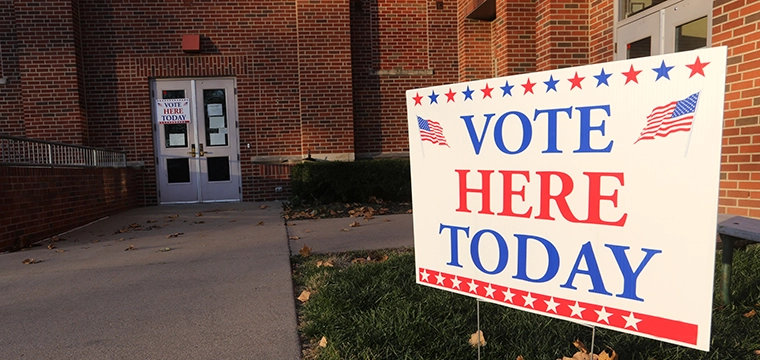
The state of North Carolina requires voters to show and approved form of ID to cast a ballot, and university-issued mobile credentials have taken center stage. Many traditional campus cards are approved, but three institutions in the state use a digital ID rather than a card.
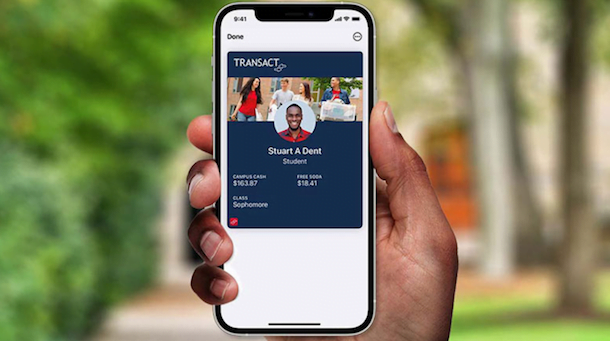
UNC Chapel Hill, UNC Charlotte, and Duke University each talked with or applied to the State Board of Elections about having their mobile IDs added to the list. UNC Chapel Hill’s request was approved, but for a variety of reasons, the others were ineligible.
There is a requirement in North Carolina that approved voter IDs must display an expiration date. Mobile credentials stored in Apple Wallet can display an expiration date using a custom field. This capability, however, is not currently supported by Google Wallet.
Duke and UNC Charlotte offer students the choice of storing their credential natively in the Wallet on either device type, so this would have left a portion of the population – those using Android phones – with an unaccepted device.
Chapel Hill, however, does not allow storage of a credential natively in Google Wallet, so they elected to only request authorization for the iOS users. Android users can come to the card office and request a physical card if they choose to do so.
Duke and UNC Charlotte offer students the choice of storing their credential natively in the Wallet on either device type, so this would have left a portion of the population – those using Android phones – with an unaccepted device.
Charlotte students that are still using a physical card can use it for voting as the cards include an expiration date. A university spokesperson told CampusIDNews that students must choose between a card or mobile ID as they are not permitted to have both. Currently 97% of incoming students choose the mobile option. Thus, only a small number of new students have the accepted card.
At Duke, the physical card did not have an expiration date. To serve students that did not have another approved ID to vote, the DukeCard office offered a new voting version of the DukeCard complete with an expiration date.
Another issue for the Duke mobile ID was that there was not a process in place to verify the individual’s photo at the time of submission. This also rendered the ID unusable according to state requirements.
On August 20, the North Carolina State Board or Elections narrowly approved Chapel Hill’s request along party lines – Democrats in favor and Republicans opposed. This began a series of twists, turns, and legal wranglings.
The Republican National Committee and the North Carolina Republican Party quickly filed a lawsuit against the State Board of Elections to overturn the decision.
Timeline:
In addition to questioning the security of the credentials, they pointed out that the statute specifically cited ID “cards” multiple times but never mentioned digital or mobile IDs. Thus, they argued that the decision was not up to the Board of Elections but instead required legislative review.
The following week, a North Carolina judge denied the Republican’s request for a temporary restraining order. The UNC mobile ID had passed its second hurdle and could be used.
But not for long.
The Republicans appealed, and the North Carolina Court of Appeals reversed the lower court’s decision. The mobile ID was removed from the list of approved voter IDs at the end of September.
While this must be frustrating for those who worked hard to make this possible, their work will help future institutions navigate the voter ID process.
Years ago, most campuses eliminated expiration dates from physical cards to reduce the need for replacement cards for long term students and staff. With a mobile credential, an expiration can be included and it can be updated in future years.
Working to ensure an expiration date is included on your mobile credential seems like an obvious step. Similarly, if voter ID is important to your institution, you should at least evaluate adding expiration dates to physical cards.
Working to ensure an expiration date is included on your mobile credential seems like an obvious step. Similarly, if voter ID is important to your institution, you should at least evaluate adding expiration dates to physical cards.
Requiring a government-issued ID or similar proof of identity with a photo should also be strongly considered – both for voter ID purposes but also for general security and ID integrity issues.
Stay informed with changes to your state’s voter ID regulations so that you can proactively address requirements in advance. Of course, this will not always be possible because the partisan nature of the issue means that requirements will likely continue to change rapidly.