Card, mobile credential, payment and security
PopID looks to leapfrog cards and make the person the credential
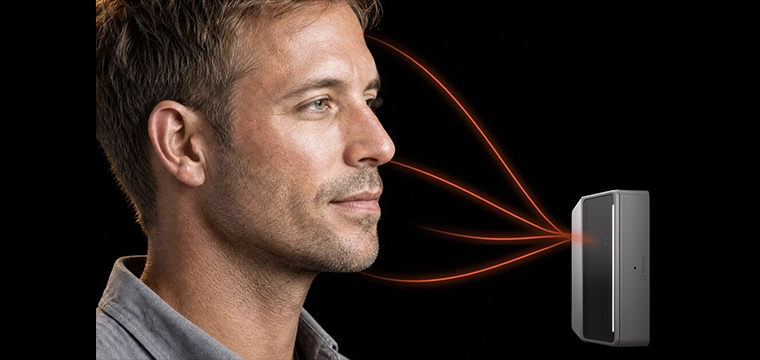
In our latest CampusIDNews chat, Tom Costello introduces PopID, a biometric identity company that has spent nearly a decade building payment and identity solutions across restaurants, quick-service dining, and access control. The company's technology allows users to replace physical cards with biometric credentials such as facial recognition or palm scanning for both identification and payment.
Costello explains how the same biometric technology could simplify life on college campuses by replacing physical student IDs. He says students could access residence halls, dining facilities, and other campus services using only their face or palm, while institutions continue using their existing credentialing systems behind the scenes.
Students simply scan their face, and we pass the same credential the institution already uses today to authorize access to the dining hall.
Unlike physical ID cards that can be shared or borrowed, biometric credentials are tied directly to an individual. Costello highlights how this approach not only improves convenience but also strengthens campus security by reducing unauthorized access and misuse of student credentials.
Although PopID has not yet fully entered the higher education market, the company is actively pursuing partnerships and pilot programs, including an initial trial with Cal Poly Pomona. The goal is to give colleges another secure, frictionless credential option that integrates with existing campus systems.
TRANSCRIPT:
PopID is based out of Los Angeles, California. We're in the biometrics business, and we've been there now for about nine years, focused primarily on restaurants, QSR, and access control.
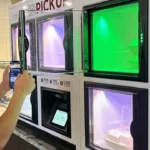
We've partnered with large restaurant brands like Steak 'n Shake and Whataburger, where we provide a biometric solution as an alternative to cards at self-service kiosks. When I approach a kiosk, I can simply check in using biometrics to access my loyalty points, previous orders, and make the entire ordering process much faster in unattended environments.
We can either retrofit existing equipment with cameras or work with partners like Verifone to provide payment terminals with our biometric technology already built in.
Users can also link a payment credential – whether that's a credit card, bank account, or digital wallet – directly to their biometric profile. That means I can simply wave my palm or smile to complete a payment.
We've worked with large payment acquirers to bring our biometric payment solution directly to businesses. We can either retrofit existing equipment with cameras or work with partners like Verifone to provide payment terminals with our biometric technology already built in. Whether organizations are upgrading hardware or enhancing existing equipment, installing the cameras is a straightforward process.
While we haven't officially launched at colleges yet, we've spent a lot of time learning about the higher education market. We've found that students are looking for alternatives to physical ID cards, both on campus and at nearby businesses.
By integrating with Atrium and matching a student's biometric identity to their Atrium ID, we can provide students with a seamless way to access dining services without needing their physical credential.
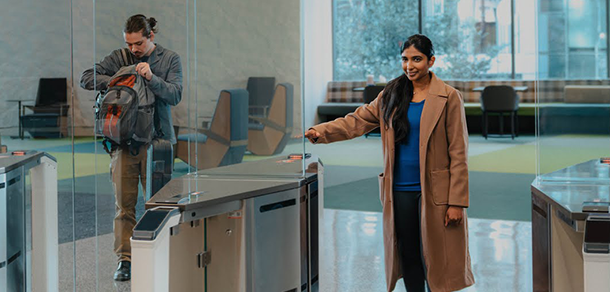
We're very interested in partnering with colleges to provide a biometric alternative to traditional campus credentials. For example, students often get locked out of residence halls because they've forgotten their ID card. Instead, they could enroll their face or palm, walk up to an access control reader, scan their biometric, and gain entry without needing a physical card.
The same approach can be used in campus dining. Students simply scan their face, and we pass the same credential the institution already uses today to authorize access to the dining hall.
We're currently exploring a pilot program with Cal Poly Pomona where biometrics will be used for dining hall access. By integrating with Atrium and matching a student's biometric identity to their Atrium ID, we can provide students with a seamless way to access dining services without needing their physical credential.
Biometrics also help reduce fraud. Students can easily hand someone else their ID card to gain access to a building or dining facility. A biometric credential, whether it's a face or palm scan, is tied directly to that individual, making it much more secure.