Card, mobile credential, payment and security
Company turns focus to grocery delivery, abruptly leaving its 60 campus clients
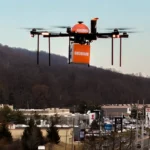
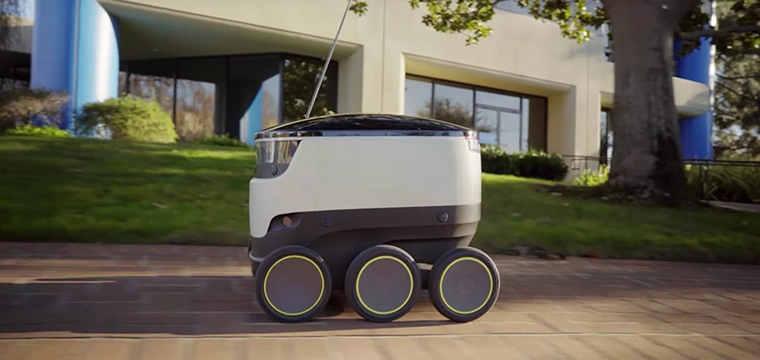
Starship Technologies announced it would shift focus to retail grocery chains and cease its campus operations. The news came as a blow to its higher education clients and the students that had come to enjoy autonomous delivery.
The robots were deployed on 60 U.S. colleges and universities, and administrators at those institutions were left with a service gap to fill and little or no time to fill it.
By most accounts, robot delivery is popular with students. It also provides university dining services an opportunity to increase sales and address the challenging nature of on-campus delivery.
The first Starship robots came to campus in 2019 when 25 rolled out at George Mason University. The number of new clients has increased each year, as autonomous delivery progressed beyond a novelty use case.
It was founded in Estonia five years prior by two former Skype execs. According to company reports, it has raised more than $280 million; deployed 3,000 robots; and completed more than 10 million deliveries across 300 locations.
Pulling units from higher ed was an obvious choice. Forty percent of its worldwide robot fleet were deployed on U.S. campuses.
Starship says grocery delivery operations in Europe and the U.S. are “on a 10x growth trajectory over the next two years.” To take advantage of that rising demand, the decision was made to repurpose the higher ed units.
Robots are expensive to build and operate, and even if money was not a consideration, it takes time to massively expand the numbers.
Pulling units from higher ed was an obvious choice. Forty percent – 1,200 of its 3,000 worldwide robot fleet – were deployed on U.S. campuses.
Both public and private companies have an obligation to investors to do what is best for long-term growth. The way this went down in higher ed, however, left many with a sour taste in their mouths.
According to the company release, “Starship has worked closely with all its university campuses and industry partners to ensure continuity of service through the back-to-school 2026-2027 season, with transition plans in place to minimize disruption for campus communities.”
Few we spoke to, however, experienced continuity.
Instead, many say they first learned of the cessation plan at the start of June. Then they were told that company reps would be on site to pick up the equipment just days later on June 6.
At Wichita State, the timeline was even shorter. According to the senior director of dining, they received written notice from Starship on Tuesday, and the following morning, the company was on campus to remove the robots.
Whatever the timeline, it left dining service administrators at the 60 campuses racing to inform patrons and seek alternative delivery options.
Former Starship campuses have options, but they vary based on how the system was implemented.
The complexity of swapping providers depends on the mobile ordering app used and if other Starship dining tech was deployed on the campus.
On the surface, it seems it was too easy for Starship to exit these relationships without adequate notice or remedy.
Some institutions will choose replace Starship with one of the other robot providers. Others may decide that autonomous delivery is not the right fit for their environment.
For those that choose not to relaunch robots, they may look to mainstream delivery options or explore campus-centric student delivery.
And what lessons emerge?
When new technology is implemented, the assumption should be that it will be hugely successful and become mission critical. Thus, to have it vanish would be a public relations, service delivery, and financial hit.
On the surface, it seems it was too easy for Starship to exit these relationships without adequate notice or remedy.
If you have ideas or feedback, please send it confidentially to me: chris campusidnews dot com