Card, mobile credential, payment and security
Employees in card issuing offices often have interesting stories of people coming in to replace their IDs. The card will be splitting into its different layers and when asked how it happened they explain they used it as an ice scraper on their windshield. Or the card will be warped and faded and the cardholder will admit to leaving it on their car’s dashboard on a hot summer day.
Federal and state agencies as well as other high-value issuers want to get as much out of a document as possible, and a 10-year lifespan seems the ultimate objective. To achieve this issuers are moving away from 100% PVC cards – the cheapest and most common type – to composite cards made up of a variety of materials, often including polyesters, polycarbonate or Teslin substrate.
Issuers are moving away from single substrate, monopolymer cards, says Joanne Ogden, global sales manager for the security division at ITW. “The standard is not a 100% PVC card anymore – because it’s not durable enough and won’t last five to 10 years,” she says.
In the past few years, the credentialing market has shifted dramatically when it comes to card materials, Ogden says. “The increased need for durability has completely changed the market. Gone are they days of PVC and top laminates,” she adds. “The documents now are far more complex, there are far more substrates out there along with an increased number of security features.”
Choosing the right materials for an identity card is important when it comes to durability. But the first thing an issuer must decide is what it means by durability. “What is the expectation of a document? Do they want it to last for five, seven or 10 years?” asks Pierre Scaglia, global segment manager for Secure Credentials at PPG Industries, which produces Teslin. “How will the document be used? Is it used once in awhile or several times each day? All of this will impact durability.”
The climate can even impact the durability of a credential. “Durability can depend heavily on the usage scenarios and environments,” says Brad McGoran, principal engineer at Exponent, a consultancy that performs card testing. “For example, cards used frequently outdoors can degrade and become brittle due to UV exposure, leading to premature failure and cracking.”
Security of the document also needs to be taken into account. An issuer can produce the longest lasting document, but if it doesn’t include security features strong enough to see it through such a lifespan, then it has done little good, Scaglia says.
Issuers are embedding security features into the different substrate layers of the card to make it counterfeit proof, Ogden says. “You might have a hologram embedded on one layer and another feature on the Teslin layer,” she explains.
Electronic components add another level of complexity when talking about durability. More and more, identity documents contain embedded electronics, and protecting these chips and antenna coils is important. “If you use highly rigid card materials with embedded electronics, in time they may crack,” says Scaglia. He adds that both PVC and polycarbonate are typically considered among the more rigid card materials.
Cards with embedded electronic components may have a shorter lifespan based on that fact alone, McGoran says. “With contact, contactless and dual-interface cards, our experience and testing have shown that the durability of the internal components, circuitry and connections can significantly affect card life longevity,” he explains.
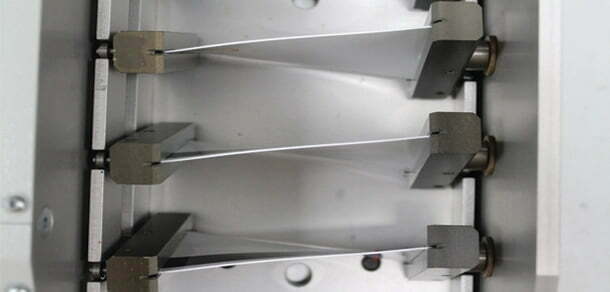
Still, maximizing lifespan is the goal and composite cards made with different materials have the best durability, says McGoran. “Blended cards such as PVC and polyester blends tend to resist cracking during repetitive flexure testing better than pure PVC card stock,” he explains. “We have observed this often translates to longer service life in the field for these blended cards versus pure PVC card bodies.”
Blended cards such as PVC and polyester blends tend to resist cracking during repetitive flexure testing better than pure PVC card stock
Polycarbonate cards are popular for European credentialing projects, Ogden says. “But polycarbonate isn’t the only answer,” she explains. “There are other substrates out there that are more cost effective and could be used with both local and central issuance applications.”
“These alternatives can also be as or more secure and durable than all-polycarbonate cards because of their increased chemical resistance, abrasion resistance and flexibility,” says Scaglia.