Campus ID News
Card, mobile credential, payment and security
FEATURED
PARTNERS
slider contactless 1

Contactless card standards: Making sense of 10536, 14443, and 15693

CampusIDNews Staff   ||   May 01, 2003  ||   , ,

In any review of contactless technology, it quickly becomes apparent that there are multiple technology choices–some considered industry standard and others that are proprietary to a specific vendor. To date, three contactless technologies have received standards classification from the International Organization for Standards (ISO), an umbrella organization made up of 130 national standards bodies from around the world, and the International Electro Technical Committee (IEC), an organization representing more than 50 national standards bodies focused on electronics.

These three standard contactless technologies, as defined by ISO/IEC, are:

  1. ISO/IEC 10536 Close Coupling Cards
  2. ISO/IEC 14443 Proximity Cards 3. ISO/IEC 15693 Vicinity Cards

Though the official name includes both ISO and IEC, in practice the terms are often shortened to just use the ISO abbreviation (e.g. ISO 14443). In the following paragraphs, we will review each of the three standards from both a technical and a market perspective.

ISO/IEC 10536
Close Coupling Cards

The ISO/IEC 10536, the close coupling card technology standard, was the first contactless standard to emerge. Cards meeting this standard must be either inserted into a reader or placed upon the surface of the reader for communication to occur. The cards have an extremely short reading distance and require accurate placement of the card of the card at the reader–both major drawbacks for a contactless technology. While ISO 10536 cards were deployed in a number of early projects, the cards are virtually unused today. And with no known supplier for integrated circuit chips for ISO 10536 technology, the standard is, in essence, dead.

ISO/IEC 14443
Proximity Cards

The ISO/IEC 14443 proximity card technology (ISO 14443) has been used for the overwhelming majority of contactless card deployments worldwide. The targeted range of operations for ISO 14443 cards is up to 10 cm, although this range varies, depending on power requirements, memory size, CPU, and co-processor.

The ISO 14443 standard document has four distinct parts:

  •  Part 1: Physical
    Characteristics
    The card is the ID-1 size (85.6 mm x 54.0 mm x .76 mm). This is the same size as a bank credit card.
  •   Part 2: Radio Frequency
    Power and Signal Interface This sections outlines the key technical characteristics of the contactless chip, including items such as frequency, data rate, modulation, and bit coding procedures. Two variations are detailed in Part 2, the Type A interface and the Type B interface. Both operate at the same frequency and use the same data rate, but they differ from one and other in the areas of modulation and bit coding (See Figure 1).
  • Part 3: Initialization
    and Anticollision
    Initialization describes the requirements for the reader and card to establish communication when the card is brought into the reader's radio frequency (RF) field. Anticollision defines what happens when multiple cards enter the magnetic field at the same time, identifying how the system determines which card to use in the transaction and ensuring that all cards presented are inventoried and processed.
  • Part 4: Transmission Protocols Transmission protocols define the data format and data elements that enable communication during a transaction.

For a system to comply with ISO 14443, it must meet the requirements of all four parts. Thus, the phrase "ISO 14443, Parts 1 through 4 compliant" is often seen in product descriptions.

ISO/IEC 15693
Vicinity Cards

The ISO/IEC 15693 vicinity card technology (ISO 15693) developed in response to the industry's desire for a contactless card technology with an operational range greater than 10 cm. The vicinity card has three modes of operation: read mode, authenticate mode, and write mode. The maximum stated ranges are for read mode, 70 cm, for authenticate mode, 50 cm, and for write mode, 35 cm.

The ISO 15693 standard has three distinct parts:

  • Part 1: Physical Characteristics
    The card is the ID-1 size (85.6 mm x 54.0 mm x .76 mm). This is the same size as a bank credit card.
  • Part 2: Air Interface
    and Initialization
    Figure 2 summarizes the frequency, modulation, data coding, and data rate values for both reader-to-card and card-to-reader communication as defined in this part of the standard.
  • Part 3: Anticollision
    and Transmission Protocol
    Part 3 describes the protocol, command set, and other parameters required to initialize communication between a reader and a card. It also defines the anticollision parameters, which facilitate the selection of a single card when multiple cards enter the reader's magnetic field.

Nonstandard Contactless
Technologies

A number of proprietary contactless interfaces are used in the industry in addition to the standardized contactless techniques described previously. Two common technologies are Cubic's GO-Card and Sony's FeliCa card.

Both of these proprietary technologies are variations on ISO 14443 but each uses a nonstandard bit rate and/or bit encoding method. Attempts by Cubic and Sony to receive standards classification for these products under ISO 14443 were unsuccessful.

In essence, the goal of the manufacturers was to add the proprietary interface types to Part 2 of the 14443 standard as Type C or Type D varieties. In response to the request, Working Group 8 determined that they would not add additional interface types to the 14443 standard.

Card Readers

With multiple card standards in place, the selection of a card reader has greater significance for a program's long-term flexibility. Well over one million contactless card readers have been deployed to date. The current deployment trend favors readers that will accommodate several different card types. An example of this flexibility is the emergence of readers that support ISO 14443 Type A and Type B, ISO 15693, and even an additional proprietary card type.

Summary

With this basic review of the state of contactless card standards complete, we can turn our attention to what makes the three viable contactless standards different. Next month we will review each technology and attempt to dispel some of the common misconceptions about each of these offerings.

Much of the content for this article was initially published in the paper "Contactless Smart Card Technology for Access Control," by AVISIAN Inc., 2002.

Subscribe to our weekly newsletter

RECENT ARTICLES

group of students taking a selfie

The future of campus identity and credentialing is mobile, biometrics, and interoperability

There are few in the campus card industry with more experience than ColorID’s VP of Sales, Tim Ortscheid. For two decades, he has played a key role in the company’s growth, helping organizations in higher ed, healthcare, government, and enterprise markets implement effective ID and credentialing solutions. Tim is known for his hands-on, customer-focused approach […]
Stephen Cornett, University of Kentucky, video promo screen

Integrated event scheduling saves time, improves security at UKentucky

The University of Kentucky integrated event scheduling software with their electronic access control system. This allowed the university to automatically unlock and relock classrooms, conference rooms, and other facilities based on approved event schedules. Stephen Cornett explains that this has helped to maintain an open, welcoming campus while still providing secure access for constituents and […]
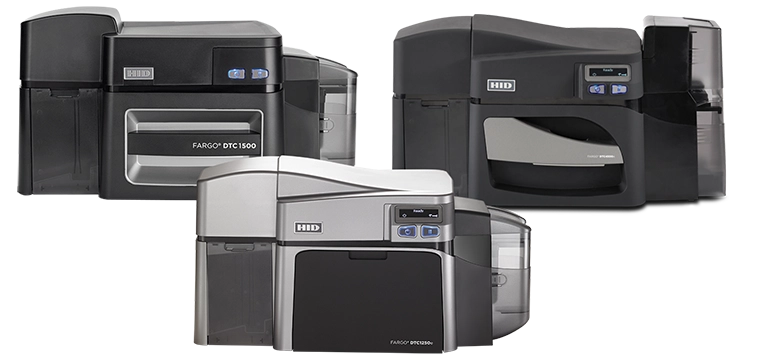
Photo of three FARGO DTC printers
Oct 07, 26 /

FARGO DTC printer upgrades boost security and efficiency for campus card offices

The FARGO DTC line of ID card printers from HID is getting some major enhancements. The DTC1250e, DTC4500e and DTC1500 models produce secure IDs faster and with less IT support. Organizations that rely on high-quality cards – from higher ed and healthcare to government, corporate, and more – widely use the FARGO DTC line. The […]
CIDN logo reversed
The only publication dedicated to the use of campus cards, mobile credentials, identity and security technology in the education market. CampusIDNews – formerly CR80News – has served more than 6,500 subscribers for more than two decades.
Twitter

Great inverview on the Public Key Open Credential (PKOC) standard with ELATEC's Jason Ouellette, Chairman of the Board for the @PSIAlliance.

Attn: friends in the biometrics space. Nominations close Friday for the annual Women in Biometrics Awards. Take five minutes to recognize a colleague or even yourself. http://WomenInBiometrics.com

Load More...
Contact
CampusIDNews is published by AVISIAN Publishing
315 E. Georgia St.
Tallahassee, FL 32301
www.AVISIAN.com[email protected]
Use our contact form to submit tips, corrections, or questions to our team.
©2026 CampusIDNews. All rights reserved.