Card, mobile credential, payment and security
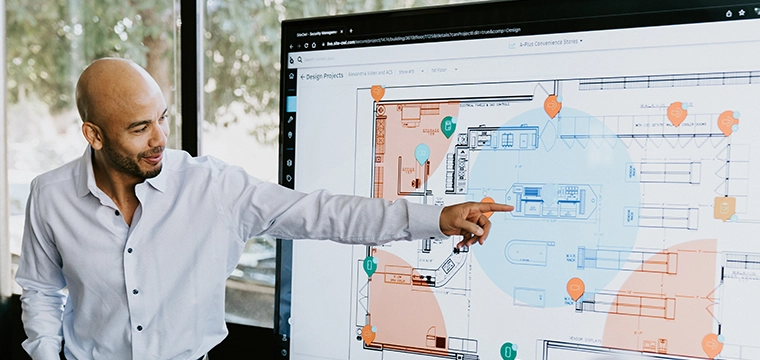
ASSA ABLOY expands portfolio with SiteOwl’s lifecycle management platform
Across campuses, security teams have steadily added more systems and devices to their physical security infrastructure – cameras, access control, intrusion detection, and emergency communications. What hasn’t kept pace is how those systems are documented, maintained, and managed over time.
For example, designs live in CAD drawings, installation details are maintained elsewhere, and service history is somewhere else. Most campuses don’t have a true system of record for physical security.
SiteOwl was built to address that gap.
Openings Studio is an information management software solution for doors, frames, and hardware. SiteOwl complements ASSA ABLOY’s existing Openings Studio platform, but it extends deeper into a user’s security environment. Learn more about Openings Studio here.
In August 2025, ASSA ABLOY added SiteOwl to its portfolio of companies. The announcement described SiteOwl as a cloud-based platform focused on physical security lifecycle management.
When a device goes offline, the first step is often identifying what it is, where it’s located, and whether it’s under warranty. Teams spend time tracking down details before work can begin. Technicians often arrive without full context, leading to delays or repeat visits.
SiteOwl covers the entire physical security environment from access control and video surveillance to intrusion detection and critical communications.
Planning work presents similar challenges. Budgeting for replacements relies on estimates rather than clear lifecycle data. “These aren’t technology problems, they’re information problems,” says Su Subburaj, Chief Marketing Officer at SiteOwl. “Security teams are managing real risk, but they’re often doing it without a complete picture.”
As campuses grow and systems become more distributed, those inefficiencies become harder to manage.
SiteOwl is designed to help campuses and integrators with design, installation, project management, asset management, and planning. It is ideal for tracking warranty information, raising service tickets, and conducting preventive maintenance audits.
SiteOwl complements ASSA ABLOY’s existing Openings Studio platform, but it extends deeper into a user’s security environment.
“Openings Studio is an information management software solution for door hardware,” explains Subburaj. “Architects and the professional services team use it to specify and manage technical information about doors, frames, and hardware.”
She says SiteOwl, on the other hand, has broader application. It covers the entire physical security environment from access control and video surveillance to intrusion detection and critical communications.
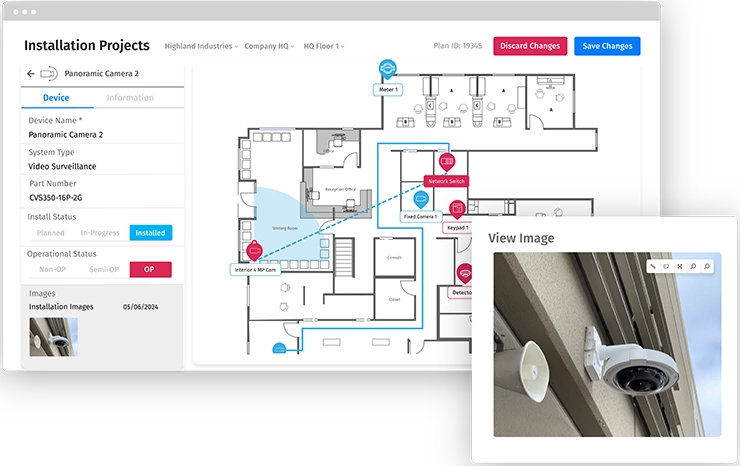
SiteOwl centralizes security information and ties it to interactive digital floor plans, making it easier to understand what is installed, where it is located, and how it has evolved over time.
At Wake Forest University, a six-person security team was tasked with completing the largest security update in the university's history. The campus infrastructure included more than 25 buildings and 1,700 devices, and they were expected to complete the project in just 18 months.
A key goal was to centralize security data, streamline vendor collaboration, and provide real-time project tracking.
Wake Forest benefitted from 30% faster project timelines, 50% reduction in time spent on site walks, 25% decrease in change orders.
They were faced, however, with fragmented data stored in different spreadsheets, emails, and other formats. This was the result of decades of work with numerous different vendors.
The team knew they would need to consolidate all the security information in one place, because they couldn't do cross system upgrades without centralizing this data.
They used SiteOwl for everything from designs to installation management. It provided visibility into all their projects, and because both the vendors and the security teams were using SiteOwl, they were in lockstep to successfully complete the project.
According to a case study, project highlights include:
Integrators use SiteOwl to streamline their entire process from sales to service. Rather than using a series of disparate tools – email, AutoCAD, project management software, ticketing system – to run the project, SiteOwl provides a single place to capture information and carry it forward. Details such as device models, mounting requirements, photos, and configuration notes are documented once and remain accessible throughout the lifecycle.
“It reduces the friction that tends to happen at handoff points,” says Subburaj. “Sales, engineering, operations and service are all working from the same information instead of recreating it at each stage.”
Rather than managing a project with email, AutoCAD, project management software, and a ticketing system, SiteOwl provides a single place to capture information and carry it forward.
This continuity helps integrators reduce rework, improve accuracy during installation, and transition more smoothly into ongoing service. For their customers, that continuity translates to fewer surprises after installation and more predictable service.
For campus security teams, SiteOwl provides a clearer picture of their security infrastructure. Information that is typically scattered is brought together and tied to interactive digital floor plans. This makes it easier to understand what is installed, where it is located, and how it has evolved over time.
Just as importantly, it gives them a shared working environment with their integrators. Rather than relying on separate documents or informal knowledge, both sides reference the same information over time.
“Security teams and integrators are working toward the same outcome, but they don’t always have access to the same information,” says Subburaj. “SiteOwl gives them a common reference point throughout the lifecycle. Today, in the market, there is no other solution that provides this level of visibility.”
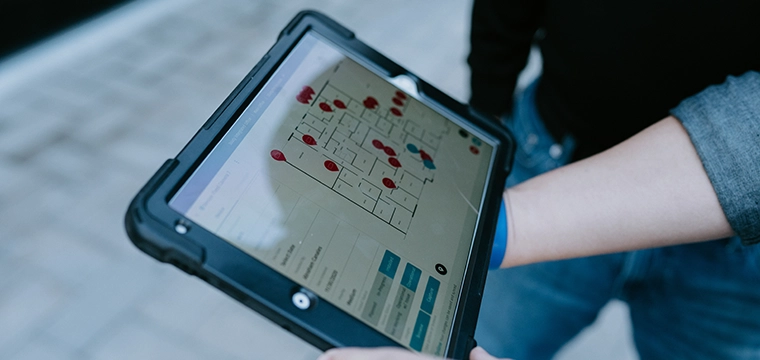
Security teams and integrators can identify issues and then share accurate information with technicians in the field.
The value of lifecycle management becomes most visible when something goes wrong.
On many campuses, responding to a device issue means first tracking down basic information: where the device is located, what model it is, whether it’s under warranty, and when it was last serviced. That work happens before any repair can begin and often leads to repeat visits or delays.
With a centralized view of the environment, security teams can identify the issue, share info with their integrator, and resolve problems rapidly.
With a centralized view of the environment, that context is already available. Security teams can identify the issue, share accurate information with their integrator, and resolve problems more predictably.
The same principle applies during projects. When design information, installation details, and asset data are connected, teams spend less time reconciling documents and more time executing. Quotes are more accurate, progress is easier to verify, and handoffs are clearer on both sides.
“When everyone is working from the same information, you avoid a lot of unnecessary back and forth,” says Subburaj. “It changes how teams experience both projects and service.”
ASSA ABLOY’s acquisition of SiteOwl reflects a practical view of how physical security is evolving. Organizations can use Openings Studio for specification and SiteOwl for ongoing lifecycle management. Together, they support a more consistent flow of information from planning through operations.
For SiteOwl, joining ASSA ABLOY opens doors.
Subburaj say they could not have asked for a better partner, as culture has been front and center at SiteOwl since it was founded in 2020.
“Because ASSA ABLOY shares the same growth mindset, they completely understand where we sit strategically within their portfolio of other technology products,” she says. “It gives us the opportunity to expand the scope of what we do and benefit from a vastly expanded sales channel.”