Campus ID News
Card, mobile credential, payment and security
FEATURED
PARTNERS
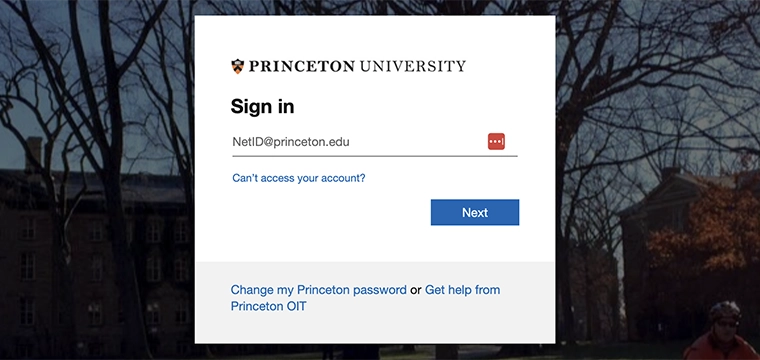
Princeton Duo login page

Princeton eliminates Duo’s SMS-based login amid rising phishing attacks

Students pushed to Duo Mobile app or biometrics, researchers analyze phishing data

CampusIDNews Staff   ||   Jun 19, 2025  ||   ,

To gain access to secure university services and student accounts, Princeton students use a multi-factor authentication solution from Duo. In the past, users could opt to receive secure codes from Duo via text message or phone call, but these methods have been phased out.

An article in the Daily Princetonian cites an email from the university’s Office of Information (OIT) Technology saying that these older methods are now, “a common target for hackers looking to compromise accounts.”

Between 2022 and 2024, there was a 44% increase in unique phishing emails and a 186% rise in reported incidents.

In mid-June, the switch was made, and all users must now rely on one of two more secure methods.

OIT’s preferred method is the Duo Mobile app, which uses push notifications that require the account owner to verify that the login attempt is valid. Second, biometric authentication using Windows Hello; TouchID or FaceID on Macs and iPhones; and Android biometric options may be enabled.

Princeton is not the only campus to take this action. Some have already eliminated SMS and phone options in their Duo system, and others are in process of doing so.

Princeton also strengthens spam filtering

The rise in phishing attacks at Princeton prompted the institution to make changes to its spam filters and email delivery processes earlier in the year.

In the two years between 2022 and 2024, there was a 44% increase in unique phishing emails and a 186% rise in reported incidents.

In response, Princeton’s Information Security Office ratcheted up the threshold on its spam filters, making it harder for phishing emails to reach inboxes. They also began diverting more of these messages directly to the user’s trash folder, bypassing the junk folder altogether.

Analyzing phishing trends at Princeton

These phishing emails are often sophisticated and targeted to the student community. They promise research assistant positions or internships, include university logos, and appear to come from actual university leaders.

The Princetonian received data from OIT on phishing attacks dating back to 2021. Authors did an in-depth analysis, and the findings provide great insight.

Specific areas of analysis include:

  • Year over year increase in phishing attempts
  • Most frequent words used in subject lines
  • Most common time of day for email delivery
  • Number of attempts by day of week.

The trends at Princeton are likely pervasive throughout higher education, so the article is a must read for all campus administrators.
Subscribe to our weekly newsletter

RECENT ARTICLES

Student using mobile phone with AIiro credential to open a door on campus

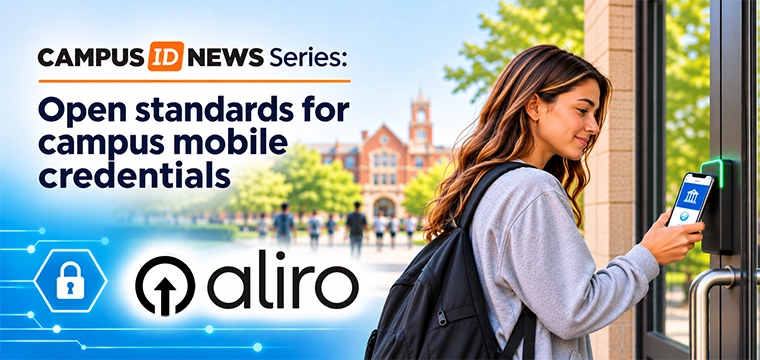
Part 3: Aliro mobile credentials take aim at the last mile of campus access

Thanks to mobile credentials, students don’t necessarily need a plastic card to prove who they are at a door. But the problem-solving phase isn’t over yet for mobile credentials. Behind the phone is still a complicated collection of readers, locks, credential systems, mobile wallets, access control software, and vendor-specific integrations. Getting all those pieces to […]
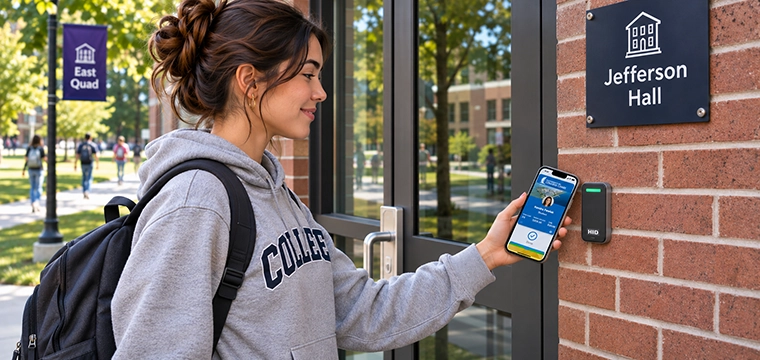
Student uses phone to tap in at an HID door access reader on campus

Illumia opens its IDX platform to support HID mobile credentials

Illumia and HID are making it easier and less expensive for colleges and universities to adopt mobile credentials. Campuses using Illumia’s cloud-based IDX platform can now deploy HID mobile credentials. Until now, IDX clients could only use Illumia’s own Mobile Credential (formerly known as Transact Mobile Credential), but now they have an additional option via […]
Student getting food in a stainless steel reusable container at a cafeteria
Nov 12, 26 /

USEFULL's stainless steel containers remove plastic from reusable dining programs

As colleges and universities look for ways to reduce disposable packaging in campus dining, reusable container programs have become an increasingly popular option. But while many solutions rely on reusable plastic containers, USEFULL is taking a different approach. It provides stainless steel containers supported by technology that tracks checkout, returns, and inventory. For Alison Cove, […]
CIDN logo reversed
The only publication dedicated to the use of campus cards, mobile credentials, identity and security technology in the education market. CampusIDNews – formerly CR80News – has served more than 6,500 subscribers for more than two decades.
Twitter

Great inverview on the Public Key Open Credential (PKOC) standard with ELATEC's Jason Ouellette, Chairman of the Board for the @PSIAlliance.

Attn: friends in the biometrics space. Nominations close Friday for the annual Women in Biometrics Awards. Take five minutes to recognize a colleague or even yourself. http://WomenInBiometrics.com

Load More...
Contact
CampusIDNews is published by AVISIAN Publishing
315 E. Georgia St.
Tallahassee, FL 32301
www.AVISIAN.com[email protected]
Use our contact form to submit tips, corrections, or questions to our team.
©2026 CampusIDNews. All rights reserved.