Card, mobile credential, payment and security
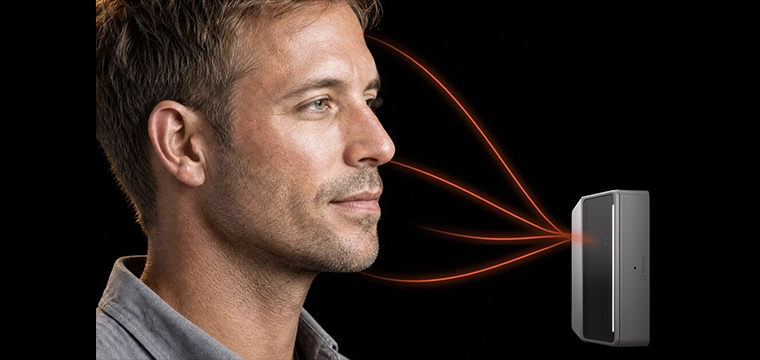
In retail locations, computer vision technology eliminates barcodes and manual entry at checkout
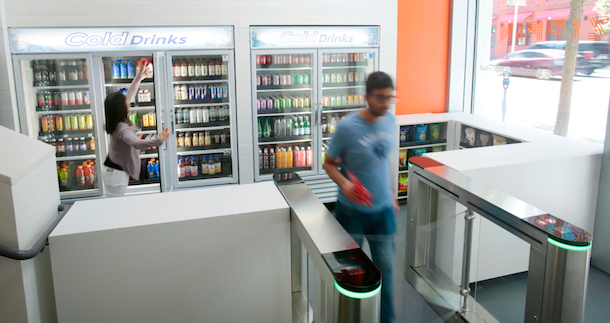
At Cal Poly Pomona, autonomous checkout systems are transforming the retail experience by removing staff from the checkout process.
In an interview with CampusIDNews, Al Padilla, Cal Poly Pomona’s Senior Manager for Retail IT, explained these frictionless systems. He says the AI-driven checkout solution from Mashgin allows students to enter a store, grab items, and leave without physically scanning products or handing over a card.
Overall, they have achieved a 75% reduction in staffing, a 30% increase in profits, and a 10–15% rise in transaction volume.
At Pomona, these stations have slashed checkout times from 90-seconds or more to just 12.5 seconds. This has virtually eliminated lines, and without lines students are less likely to pass the stores if time is tight.
Padilla says the integration with the Bronco OneCard and mobile credentials through Atrium Campus enables versatile payment options, including card swipes, taps, and QR code scans from mobile devices.
Though these systems minimize the need for checkout staff, some personnel remain to handle restocking, assist customers, and serve as concierges. Overall, they have achieved a 75% reduction in staffing, a 30% increase in profits, and a 10–15% rise in transaction volume.
To listen to the full interview, click the image at the top of this page.
Transcript
The autonomous systems that a lot of people are talking about today are systems that don't generally need staff involved in a transaction.
They are frictionless so you're not really handing over a card, you're not taking items and scanning them. The systems are doing all that for you.
So what's happening is students are walking into an area or an environment, picking up products, either setting them on a platform with a system and checking them out, or they're just grabbing a stuff, putting it in a bag, putting it in a pocket and just walking out.
So some people use that terminology, just walk out, as the name of the product, as Amazon does.
You have AiFi, which is another system, and Mashgin, which we use on campus at Cal Poly Pomona to help our students get in and out of the store quickly.
So when you talk about not having staff, we're talking about checkout staff.
They’re not scanning the items for you, or taking your card and taking payment or cash from you. Instead, that's where the systems come in and play, and they take that particular job.
So naturally, we do have someone there to still stock the store, or they also have other tasks that they'll do. They'll go out and they'll work at another store, then come over, do restocking, play concierge for a little while, do some upselling from the floor – instead of from behind the counter, and then of course, they're there also to make sure the students are able to run their transactions smoothly.
So any questions on product or anything like that, or different options for what they're looking for. We'll have someone to talk to.
We went from initially going 95% person-less to about 75%. We decided we want to make sure we have somebody there as a concierge, so we're 75% less staff than we were before.
The Bronco OneCard is used everywhere on campus.
So in a frictionless environment with Mashgin, what we're doing is we're using all the different types of credentials that you can.
You can tap a card, you can swipe a card, you can also use our mobile ID to scan a QR code, and all that's made possible with Atrium Campus and their integration with Mashgin.
Mashgin has been extremely successful for us in quite a few ways.
Number one, we've lowered the cost of our employee costs, 75% is where we ended up landing. We've increased our profit by 30% over the years. We have about 10% to 15% increase in transaction counts, and about 400% decrease in transaction times.
Checkout used to be upwards of a minute and a half to two minutes, now it's 12 and a half seconds.
So if you have 12 and a half second transactions, you have no lines, you have nobody walking by because they see that it's crowded, there's long lines, so they keep going, now they're coming in grabbing what they want and going.
So we're very conscious of people's time and trying to get to their next class.
One thing we want to think about moving into dining or food service is going to be like the concept, and we're just talking about trying to put it together right now, but kind of where we would have an area that would have three or four different concepts feeding food in from the back into warmers where people can do a lot of grab and go.
So if you came into an area, grab what you want to say you want, subway sandwich or a burrito, or a coffee or pastry.
You can go through, grab what you want on any of them, take all of those items to one central checkout, and go to a checkout from there, so you're able to visit three different concepts, four different concepts, and you should have one checkout process.
There's other autonomous systems out there, but I would say they're more expensive.
For us in our use case, being able to stand them up quickly and at a smaller cost, and still get AI technology and autonomous technology that works really, really well and super-fast.
I think that was the biggest thing for us, we were able to get them in, no construction costs, and have them stood up within five or six hours.