Card, mobile credential, payment and security
Interview covers importance of both technology and cultivating a safety-first culture
Access control in higher education is no longer just about securing perimeter doors. Today, lockdown technology, interior space security, and classroom cameras are all part of a complex equation. To discuss the topic, physical security leaders from Brigham Young University (BYU) and the University of Pittsburgh participated in a recent Assa Abloy podcast.
One of the critical aspects of an effective lockdown policy is ensuring that it is informed by multiple perspectives across the university. At BYU, the Master Safety Working Committee formulates and reviews lockdown policies. This committee is composed of representatives from various campus departments, including academics, housing, athletics, and administration.
According to Steve Goodman, Associate Director of Police and Security at BYU, this diversity of viewpoints allows for a well-rounded approach that reflects the needs and concerns of the entire campus.
“We present [the policy] and then get their feedback,” says Goodman. “This feedback loop helps to create a solution that serves BYU’s safety goals while taking departmental needs into account.”
Both BYU and Pitt emphasize the importance of obtaining input from various departments to create effective lockdown policies.
By gathering input from areas like student housing, where large gatherings and complex building layouts are common, he says the committee can better anticipate challenges and refine protocols.
Todd Williams, Operations Manager for the Integrated Security Department at the University of Pittsburgh, also stresses the importance of collaboration. His department worked closely with other units to develop their lockdown procedures and obtain necessary buy-in from campus leadership.
“The integrated security department at Pitt initially built the plan – here's how we're going to lock it down, here's how we're going to run it,” he explains. “Then the Pitt police are the ones who establish when it goes into effect and how it gets run.”
For both universities, establishing a transparent and inclusive process has proven crucial in building confidence and trust with faculty, students, and staff.
Effective campus security also depends heavily on technology. Both BYU and the University of Pittsburgh have invested in advanced access control systems to secure classrooms and other interior spaces.
BYU standardized their lock systems, opting to primarily use Assa Abloy’s wireless IN120 and HID readers. Limiting the variety of locks on campus simplifies maintenance and ensures consistent functionality.
“It makes our life a lot simpler by having only two types of locks,” Goodman says, stressing that it decision reduces complexity for both security staff and facility management.
BYU’s approach to using a limited variety of locks simplifies maintenance while Pitt's strategic use of cameras in hallways balances security needs with privacy concerns.
The simplicity of this approach enables use of Wi-FI for remote scheduling and monitoring. This integration is crucial for real-time access control, as it allows security personnel to adjust settings as needed, quickly review data if a security incident occurs, and initiate campus-wide lockdowns.
Pitt took a different approach using Assa Abloy’s ES100 locks for classroom doors while also incorporating classroom cameras.
About 400 classrooms are equipped with these systems, and expansion is ongoing, says Williams.
The university opted not to install cameras inside the classrooms themselves, respecting privacy considerations. Instead, cameras are placed in hallways to capture entry points and main corridors.
For campuses considering similar upgrades, Williams emphasizes the importance of understanding the available hardware options and working with a trusted integrator to ensure seamless installation.
“I would recommend building a plan, knowing what hardware is out there, and working with a good integrator,” he advises.
The technical aspects of campus security are crucial, but both institutions recognize the importance of fostering a safety-conscious culture among students and faculty.
BYU has integrated its lockdown technology into its broader safety training for students and staff, making it a core component of their active aggressor training. Each classroom lock at BYU is equipped with a red emergency lockdown button, which is clearly labeled and easy to use in a crisis.
Goodman points out that many college students today have already experienced active shooter drills in K-12, making it easier for them to understand and adapt to university-level safety protocols.
Building a culture of safety through training and visible, accessible lockdown tools prepares campuses for emergencies.
The Pitt team also makes sure that faculty and staff understand the lockdown systems in place and know how to respond during an emergency. This knowledge fosters a collective responsibility for security, where everyone plays a part in keeping the campus safe.
Both men agree that implementing effective campus security measures takes more than just locks and cameras. It’s about creating a culture where safety is prioritized, policies are respected, and everyone is prepared to act if necessary.
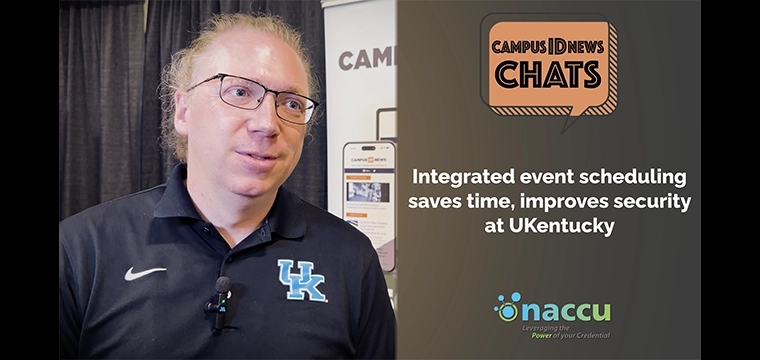
The watch the full interview click the image at the top of this page.