Card, mobile credential, payment and security
Fully robotic prep and delivery systems target at-home cooking, but could prove ideal for on-campus dining
After upending the transportation industry with Uber, founder and former CEO Travis Kalanick has his sights set on food. He wants to revolutionize how food is made and delivered by automating the entire process, not just one component. From robotic food prep to self-driving delivery, he sees a future where human labor is almost totally removed from dining.
In an interview with the All-In Podcast, he detailed the concept he’s nicknamed the “autonomous burrito.” To build it, he has already raised more than a billion dollars for his company CloudKitchens.
At the core is a 60-square-foot robotic kitchen developed in-house at Kalanick’s R&D center. Its multitude of stainless tubes and conveyor belts automates fast-casual meals like burrito bowls and salads. When an order comes in, it goes directly to a robot rather than human cook.
A small carrier moves the bowl through a sequence of ingredient dispensers. Each one precisely drops the right portion of ingredients – measured to the gram – for the selected meal. A specific bowl, for example, might use a precise recipe of rice, protein, vegetables, and sauce.
The autonomous burrito isn't just a concept – it's a full-stack, robotic system that's working to transform food production at scale.
The bowl is sealed, bagged with utensils, and sent to a temperature-controlled locker via a self-guided robot. Food delivery drivers like DoorDash or Grubhub can their app to retrieve the order from the correct locker. No humans, no mistakes, no waiting.Kalanick says the costs savings on labor are massive. Currently labor accounts for 30 to 35% of a restaurant’s revenue. He believes he can cut this to just 7 to 10%.
Labor is not totally eliminated, as humans will still prep ingredients and fill machines. Once the dispensers are loaded, however, the system can operate autonomously for hours, producing hundreds of consistent meals.
While the current system assembles meals from pre-cooked components, the next step is to automate the actual cooking process. This means integrating grills, fryers, and ovens into the production line.
This development would unlock what Kalanick calls the “internet food court – a robotic hub that could prepare all types of meals at scale. Rather than housing dozens of kitchens, a single 8,000-square-foot facility could contain a few advanced machines with 50-100 dispensers. With this setup, the system could serve any programmed recipe, tailored to the customer’s preferences.
He says this isn’t about replacing restaurants. It’s about competing with grocery stores and home cooking. Since 85% of meals are consumed at home, CloudKitchens sees that as its opportunity.
This type of system could be ideal for on-campus dining, particularly at large institutions that feed thousands of students daily. The reduction in human labor would reduce costs and help address the ongoing labor shortage.
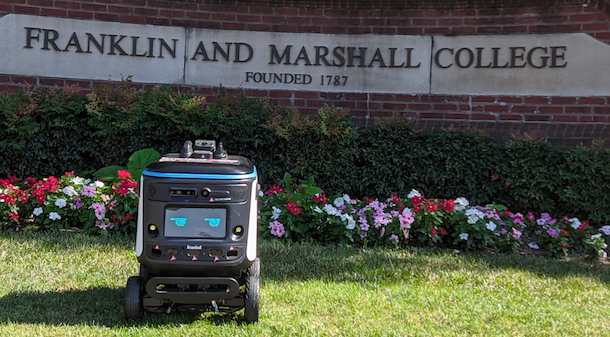
Students already accustomed to dining tech such as mobile ordering, food lockers, and robot delivery. This more advanced, comprehensive offering would be unlikely to phase them.
To learn more, check out the first 20 minutes of the full podcast here.