Card, mobile credential, payment and security

As states and government agencies begin with digital ID, higher ed has six years under its belt
We are on the verge of a digital ID revolution that will bring enhanced convenience and security across industries. Government-issued digital credentials will enable online service delivery with massively enhanced security levels that can help eliminate fraud and make it easier on users. Mobile driver’s licenses will be more than just a replacement for a plastic card.
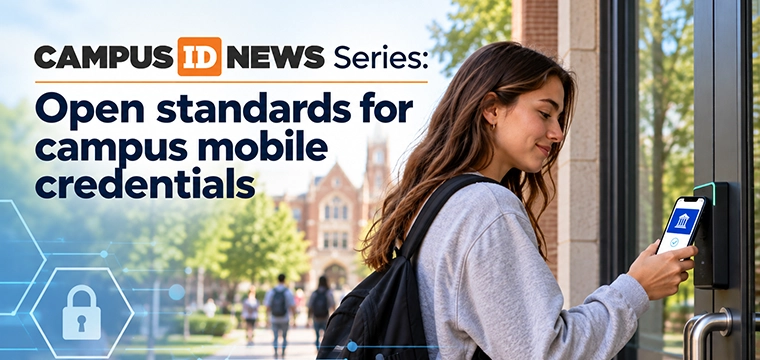
While these digital credentials are beginning to gain traction, college campuses have already embraced the technology, and they are providing a model for other sectors to follow.
In an IDTechWire article, Rasheed Behrooznia, Senior VP at Transact+CBORD, explores the lessons to be learned from higher ed’s use of mobile credentials.
Gen Z wants digital ID. One study found that 80% of Gen Z consumers already use digital wallets and are eager to store IDs and event tickets alongside payments. Seamless integration of these other services into smartphones and wearables will continue to be key to mass adoption.
It is also important that users find real value in the credential. In higher ed, this was achieved by enabling numerous services from accessing dorms and campus facilities to paying for meals.
With a good user experience, digital IDs can take hold rapidly.
“At Penn State, more than 25,000 students, faculty and staff adopted digital IDs within the first semester,” says Behrooznia.
For technology to succeed, awareness and engagement are crucial. In higher ed, multi-channel campaigns are often used to encourage adoption. Peer influence also helps as students observe others using the mobile credential.
“Promoting new technology is as critical as designing it,” says Behrooznia. “Organizations must prioritize awareness, education, and clear communication to drive uptake.”
Digital IDs improve operations and workflows when compared to traditional plastic IDs. They also streamline processes like credential issuance, move-in day, and dining hall entry. This reduces long wait times, improves user satisfaction, and can save money.
“At the University of Alabama, administrators emphasized how the ROI on digital IDs quickly justified the upfront investment,” he says. “Cost savings on card replacements and lock maintenance freed up resources, while shorter wait times at dining halls improved student satisfaction.”
Unlike physical IDs, digital credentials offer multi-layered security, including encryption and biometric authentication. If a student loses their phone, their digital ID can be deactivated remotely, preventing misuse.
Added security, however, should not come at the expense of the user experience. In higher ed, these layers of protection are baked into the devices and the credentials, so they are invisible to the students.
This should be the goal of any government-issued digital credential as well.
“As campuses balance security and usability, they set a high bar for what digital credentials should deliver,” he says.
With three million students already using digital IDs, higher ed is a model for similar credentials in corporate, government, and other sectors.
Today, more than four in ten U.S. consumers expect to use their digital wallets to store IDs in the next few years. To meet this demand, correct implementation will be essential.
“The lessons from college campuses are paving the way for a future where secure, convenient, and inclusive digital identities reshape how we live, work, and interact globally,” Behrooznia concludes.