Card, mobile credential, payment and security
BY MARCIA TURNER
Picture large trash barrels brimming with paper, overflowing discarded sheets littering the floor. That used to be the scene in the University of Cincinnati computer labs. “We were seeing huge amounts of wasted paper, with our computer lab assistants hauling away barrels of discarded printouts each day. The problem had grown steadily in recent years, due to the increase in online information,” explains Technology Manager Don Rainwater.
Nearly 6.4 million sheets of paper churned through computer printers each year – that’s 182 sheets for every student on campus. Computer users clearly weren’t at all concerned about paper waste, thought Technology Manager Don Rainwater. So he set about to find a way to reduce waste and its associated cost. His first step was to convene a campus-wide steering group of service providers to insure one solution across campus, as opposed to various and differing departmental solutions. He succeeded.
Today, following the introduction of the Pharos Uniprint printer management system, paper volume has declined 72% just in the last few months at the University of Cincinnati, and Rainwater has netted an estimated savings of more than $74,000 a year on paper and toner at the school, based on results from the spring quarter. Although impressive, Cincinnati’s story is more typical than not of today’s technology-driven campuses.
Free printing, more waste
Like many universities, the University of Cincinnati historically provided free printing for its 35,000 students, spending approximately $600,000 a year to allow them to generate as many documents as necessary to complete their coursework. However, Rainwater began to wonder if a new approach to university-wide printing was needed.
So he, along with a group of other concerned administrators, met in early 2002 to talk about the rising cost of continued free printing. He did an informal survey of the university’s 17 colleges to better understand campus-wide printer usage. And he identified other universities that had installed printer management systems as a means of tracking and charging for student printing.
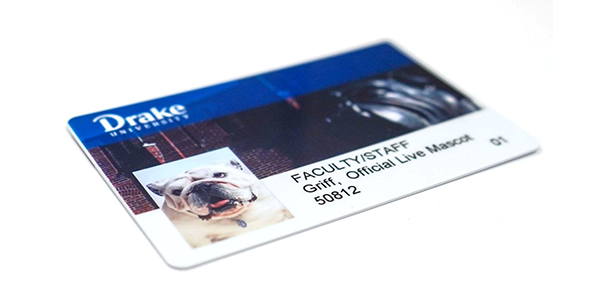
The University of Cincinnati was already using the Blackboard One card – renamed the Bearcat card - as a means of processing student payments on campus and was hoping to find a solution that would allow printing purchases to be added to the existing card. Discussions with several vendors, including Blackboard, led Rainwater and his committee to move ahead with a pilot system of the Pharos Uniprint system, of which Blackboard is a reseller. The Uniprint system was tested at eight of the highest-use printers on campus, beginning last June.
Testing the system
Positive feedback from the pilot test led the steering committee to recommend a campus-wide roll out. However, since students hadn’t been warned of the impending print charges, the committee decided to roll the system out gradually.
At the beginning of fall quarter 2002, the Uniprint system was placed into limited production in several University of Cincinnati computer labs, on the public printers in Langsam Library and the Health Sciences Library, and in one location in University College. Beginning that quarter students also had to use their Bearcat card to release print jobs to the printer, meaning that they had to physically insert their cards to authorize a document to print. Although no fees were involved, this new step helped students adjust to a new routine.
More information
Soon after the quarter began, rumors started swirling that the university was planning to charge students with high print costs beginning the following quarter. To address rising student concern over printing costs, the university developed a communications program to fully explain why it was implementing a printer management system and how exactly it would impact students.
One of the communication tools explained how the new Uniprint system worked:
“Uniprint acts as a queue manager for each of the printers defined within the system. When you print to a Uniprint-managed printer, the system puts your print job into a queue. You go to a release station attached to the printer, slide your UC ID through a card reader, select your print job and click…”
In addition to explaining the logistics of the new system, the focus of the communications campaign was to make students aware of how much paper they were wasting. “Think before you print” became a slogan the technology group used to heighten awareness of paper and toner waste.
Supporting the message to students with conservation facts helped to increase awareness and support for the University’s actions:
“2,831 trees are consumed by users of UC public printers in one year. 1,130 trees could be saved in one year, if users of UC public printers reduced their printing by 40 percent.”
With a goal of waste reduction and cost recovery, rather than revenue generation, the University installed Uniprint software in more than 100 printers for the winter quarter and a new charge of 7 cents announced, effective February 1, 2003. The 7 cent fee covers the university’s paper, toner, and maintenance costs on the black and white printers and is still 1 cent cheaper than nearby Kinko’s, reports Rainwater.
Two color printers are also installed on campus and are being tested at a cost of 50 cents per print. Because the cost of color printing is still so prohibitive, explains Rainwater, it would be tough for Cincinnati to offer it without the use of the Uniprint system to help recoup some of the expense. Through the use of the printer management system, students now have access to color printing on campus that they wouldn’t otherwise have.
Big savings
The university still provides some printer subsidies. All students receive 100 free prints per quarter, with charges only being applied once those first 100 prints are made. Some colleges also provide additional subsidies of between 100 and 200 prints to their students.
During the spring quarter, print volume was down nearly 72 percent, representing a savings of more than $74,000 on consumables, and salvaging more than 2,000 trees in annual waste. Where students used to print more than 6 million sheets a year, that number has dropped to under 2 million.
In just a few months, the change has been remarkable, says Rainwater. “We’ve seen a huge reduction in waste. With Uniprint, students only print what they really need, and they take whatever they print with them.” The result is less waste, cleaner computer labs, smaller printing budgets, and satisfied students.