Card, mobile credential, payment and security
By Jeff Koziol, business development manager of campus software partners, Allegion

In-person classes resumed at most campuses this fall. After spending more than a year concentrated on the health risks of the coronavirus, focus is shifting back to physical security and summoning up conversations of campus lockdown protocols.
Hostile intruder situations are often top of mind when discussing a lockdown, but there are several reasons why universities need to button up security across campus or at specific locations. Pandemic-related closures, social unrest and civil disturbances, and even severe weather can lead to lockdown. It’s important that your campus security is prepared to respond in any situation.
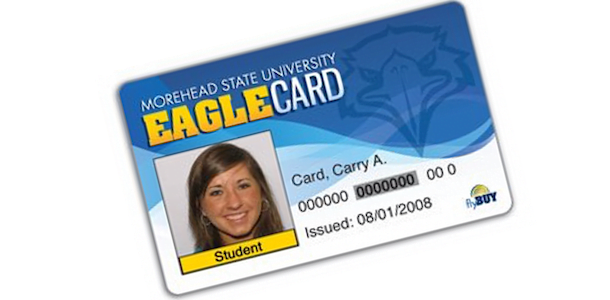
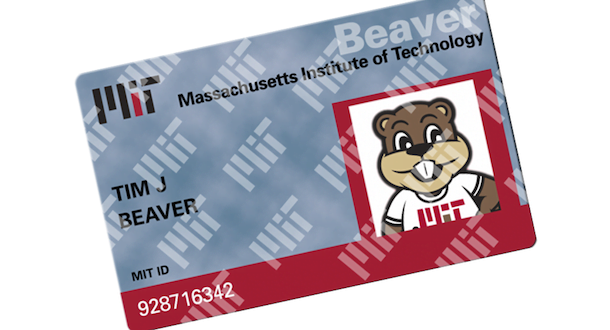
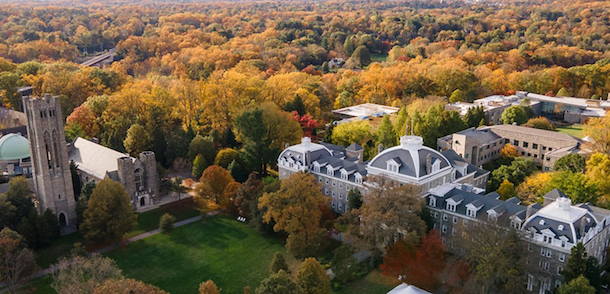
One of the biggest reasons college campuses are so difficult to secure is because they’re intentionally open, operating more like a small community than an impenetrable facility. Unlike K-12 facilities, where you traditionally have a single building to secure and students’ movements are heavily restricted within set hours of operation, a college campus is comprised of several disparate buildings and students are free to come and go at any time. Most of this is possible thanks to a campus card that controls access while giving students a sense of freedom.
"One of the biggest reasons college campuses are so difficult to secure is because they’re intentionally open, operating more like a small community than an impenetrable facility."
Regardless, the core goal is the same: keeping students, staff and faculty safe by preventing people from accessing places where they shouldn’t be. One of the best ways to achieve this is by performing a campus security audit. I recommend bringing together all your stakeholders to get a holistic picture of security on campus and figuring out how credentials play a role in lockdown protocols.
It also helps to think about it in layers. The outside layers, the building perimeters, are likely secured through an access control system. From there, address the layers inside of those buildings in places where students learn or gather. Classrooms, offices, lecture halls and assembly areas—all of these need to be included in your lockdown plans.
Following high profile mass shootings over the last 15 years, many colleges and universities wanted to be able to initiate a universal lockdown that could secure an entire campus with the push of a button.
Your campus probably has something like this in place today, where certain critical doors are put into lockdown remotely by a system administrator. Usually, this will restrict most individuals' credential access to those spaces, with the exception of security, campus police and first responders.
"Performing a campus security audit can provide a holistic picture of security on campus and show how credentials play a role in lockdown protocols."
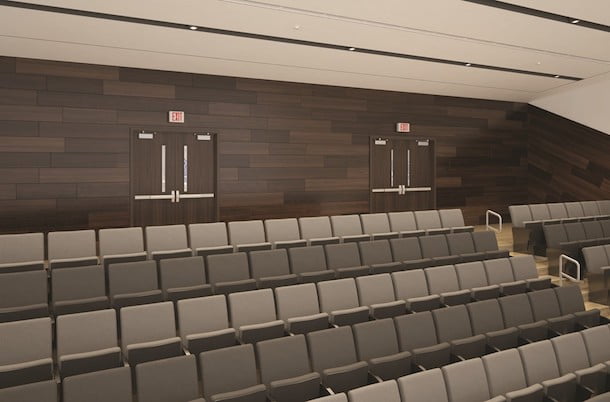
Over time needs have evolved, and campuses are looking to supplement lockdown procedures with more immediate options. That was the case at a large university in Indiana, which uncovered the need for manual, local lockdown on campus in its larger lecture halls. Doors to these spaces had electronic latch retraction for daily access control purposes. But in an emergency, the university wanted students and staff inside the classroom to have a way to override the retracted latch and prevent an intruder.
In response, Allegion introduced the Von Duprin Emergency Secure Lockdown (ESL) to overcome this challenge and provide students and staff assurance that they are safe in times of distress. If lockdown is necessary, students or teachers can turn the thumb turn or cylinder key of the ESL installed in the exit device. This action will electronically extend the latch bolt and prevent it from retracting if an intruder tries to gain access with a viable campus card.
Going back to the layered approach, it’s important to address both local and universal lockdown needs at each of the layers, identifying how campus cards might come into play. At the interior layer, smaller classrooms and offices often have mechanical door hardware that can be locked from inside the room so students can easily secure the door in event of an emergency.
"The core goal is always the same: keep students, staff and faculty safe by preventing people from accessing places where they shouldn’t be."
Larger spaces with electronic access control hardware -- like the lecture halls described above -- are easy to secure remotely but lack a more immediate solution. This can leave occupants vulnerable to intruders that have campus credentials until administrators initiate a lockdown through the access control system.
It’s been a while since universities have had their full student populations roaming about campus. Now, more than ever, institutions of all shapes and sizes should ensure they have emergency preparedness strategies in place and that students, staff and faculty are aware of what to do in the event of an emergency that requires a lockdown.
Allegion has a team of experts available to help develop a strategic plan that fits your campus. Contact us to get started today.