Card, mobile credential, payment and security
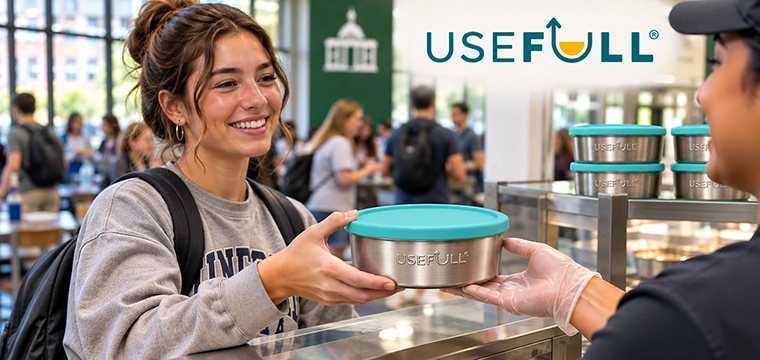
Containers integrate with campus cards, payment systems, and mobile apps
As colleges and universities look for ways to reduce disposable packaging in campus dining, reusable container programs have become an increasingly popular option. But while many solutions rely on reusable plastic containers, USEFULL is taking a different approach. It provides stainless steel containers supported by technology that tracks checkout, returns, and inventory.
For Alison Cove, founder and CEO of USEFULL, eliminating plastic is central to the company's mission. That includes not only reducing single-use packaging waste but also addressing concerns about health consequences of human contact with plastic materials and helping dining operations control costs with more predictable packaging expenses.
Because stainless steel options are not widely available, the company designs and manufactures its own containers and develops the technology used to manage them. Its system integrates with campus card and transaction platforms, allowing students to check out reusable containers using their campus credentials or other payment methods.
Virtually all students in retail dining locations use takeout, while just 5%–10% use takeout in residential dining.
Cove says USEFULL currently serves more than 20 colleges and universities with thousands of containers circulating daily. Its focus has shifted as campus dining patterns have evolved, with retail dining and grab-and-go locations emerging as particularly important opportunities.
When it first launched, USEFULL initially explored reusable coffee cups through partnerships with a number of Boston-area cafés. Cove says the concept generated interest but struggled to achieve the transaction volume needed to scale.
The pandemic disrupted that business, but it also created a new opportunity in higher education.
Colleges suddenly needed to provide large volumes of takeout meals while maintaining dining services for students living on campus. The resulting demand for disposable containers created significant expense and waste.
"All of that takeout packaging was extremely expensive and wasteful," she says. "They needed to come up with a solution to address those pain points."
USEFULL shifted its attention to higher ed, initially emphasizing residential dining programs. As dining operations returned to normal post-COVID, however, the greatest opportunity moved toward retail dining locations.
Cove estimates that takeout now represents just 5% to 10% of residential dining transactions, compared to virtually all transactions during the pandemic.
USEFULL reports potential savings of 30%–50% compared with disposable compostable packaging.
In contrast, however, campus retail operations – such as burger restaurants, burrito concepts, cafés, and student union food courts – frequently package every order for takeout. This is the case even when students ultimately eat inside the building.
That distinction makes retail dining especially attractive for reusable container programs.
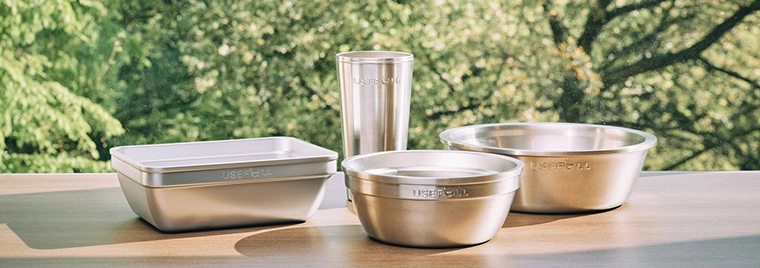
USEFULL differentiates itself from other reusable container providers through its emphasis on stainless steel rather than reusable plastic.
"We design and manufacture our own containers," she explains. “They must be plastic-free because we are addressing the plastic problem.”
USEFULL sees that problem as having two dimensions: environmental waste and health concerns associated with plastics and microplastics. Additionally, with global supply chain issues, single-use packaging costs have skyrocketed. USEFULL offers an affordable alternative.
"The plastic problem is two-fold, certainly the environmental waste side of it, but then I think more importantly is the health side of it," she says.
Concerns about microplastic exposure and potential health consequences are receiving increased scientific attention.
USEFULL's core product line includes double-walled, vacuum-insulated stainless steel containers designed to maintain food temperatures for five hours or longer. The company offers several food container sizes, including a bento-style option, along with soup containers and 16-ounce and 24-ounce beverage cups.
Clients report return rates exceeding 99%, a critical metric for keeping reusable programs economically viable.
It has also introduced a grab-and-go line for refrigerated items such as salads, sandwiches, and sushi. Those containers use single-walled construction and clear silicone lids. The grab-and-go option is currently heavily plastics-based for food packaging.
Cove says the durability of stainless steel is another important consideration. Unlike reusable plastic containers that may need frequent replacement, the company's containers are designed to remain in service for years.
Stainless steel also offers operational advantages in campus kitchens. Cove notes that metal containers emerge from commercial dishwashers dry, whereas plastic containers often retain water and require additional drying time.
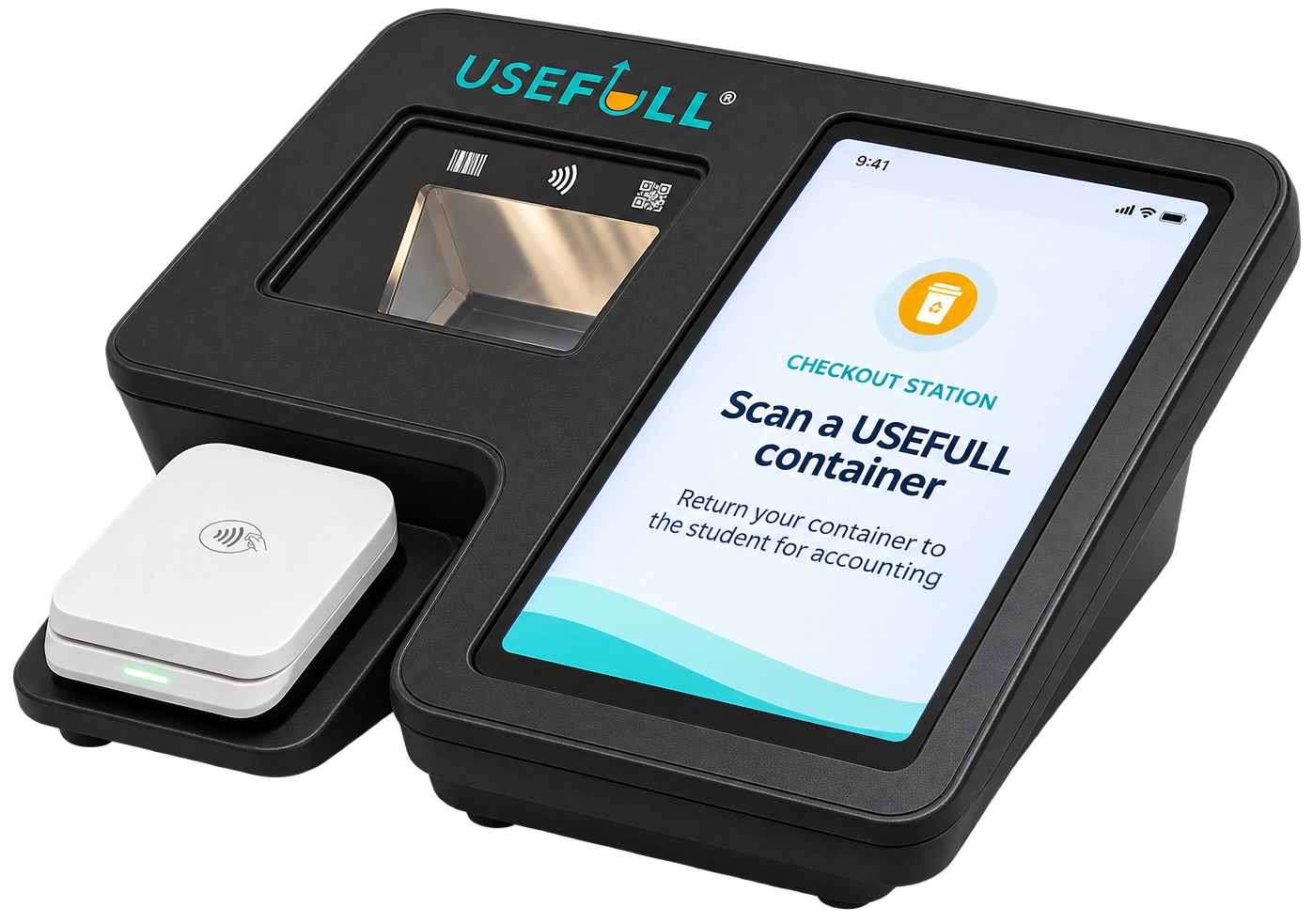 For campus card administrators, one of USEFULL's more significant developments is its expanding integration with campus credential and transaction systems.
The company has traditionally relied on a mobile application that allows students to check out containers, monitor return deadlines, view environmental impact information, and contact customer support.
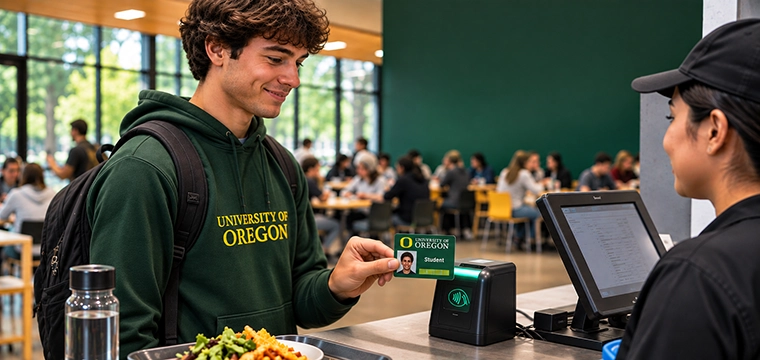
USEFULL has now introduced checkout stations that allow students to obtain containers by tapping a physical campus ID card or a payment card without opening the app.
"We've enabled a lot of campuses now to go app-free, and it's just a tap of either a student ID card or credit card to check out a container," Cove says.
The company supports campus card payment integrations with providers including Illumia, Atrium, and TouchNet, along with single sign-on capabilities. This enables institutions to connect reusable container transactions with existing campus identification and payment infrastructure.
Although USEFULL's checkout stations allow students to obtain containers without downloading an app, the company continues to encourage use of its mobile app because of the additional information and functionality it provides.
Through the USEFULL app, students can:
For students who prefer not to download the app, USEFULL's checkout stations provide an alternative using a campus ID card or payment card. This gives institutions flexibility in how they implement reusable container programs while maintaining the tracking and accountability needed to manage inventory.
USEFULL's transaction technology is designed to create accountability without charging students for normal container use.
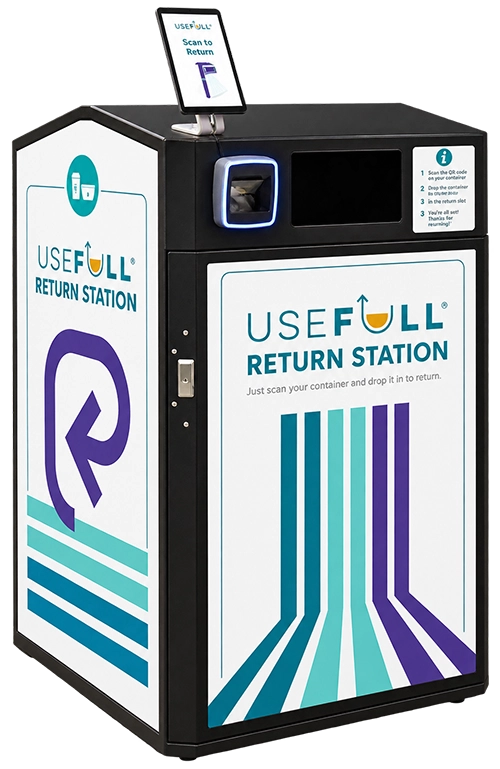 "It's entirely free to use our system," Cove says. "We just administer late and lost fees as dictated by our campuses, which we manage via our application."
Although campus card and payment platform integrations support checkout, Cove explains that USEFULL handles the associated fee transactions directly rather than routing them through mobile ordering providers.
Company data indicates that students often return containers much sooner than expected. Many are returned within five to ten hours of checkout, rather than remaining in residence halls for days.
Campuses commonly establish two-day return windows to keep containers circulating and avoid food being left inside for extended periods.
They report return rates exceeding 99%, a critical metric for keeping reusable programs economically viable.
The company generally retains lost-container fees to fund replacement inventory. Financial arrangements can vary depending on the institution, particularly when campus accounts are not required to maintain sufficient funds to cover unreturned containers.
For institutions, USEFULL operates through a leasing and licensing model. Pricing is primarily based on the number of containers deployed rather than total enrollment.
The company says its programs can generate significant savings compared with disposable packaging. It cites potential savings of 30% to 50% compared to single-use compostable containers.
One of USEFULL's longest-running higher education programs is at Mount Holyoke College in Massachusetts, which launched in February 2022.
According to Cove, the institution has approximately 2,000 students and has recorded roughly half a million container checkouts since implementation.
Mount Holyoke has seen 500,000 container checkouts since its launch in 2022, and virtually all of the original containers are still in service.
As evidence to the stainless steel advantage, she says all of the containers from Mount Holyoke’s original launch are still in use.
Cove believes reusable dining programs have gained considerable acceptance since USEFULL entered higher education.
"Five years ago, when I started in higher education, people thought I was the crazy one for talking about plastics and all the rest of it," she says.
Today, there is increasing interest in alternatives to disposable packaging. While there has been growing competition among reusable container providers, Cove believes that reusable plastic may check a fictitious sustainability box, but it is not a solution.
For colleges evaluating these programs, choosing the right container is important, but so too is the integration with campus card systems, mobile ordering, and retail dining platforms.