Campus ID News
Card, mobile credential, payment and security
FEATURED
PARTNERS
password 1

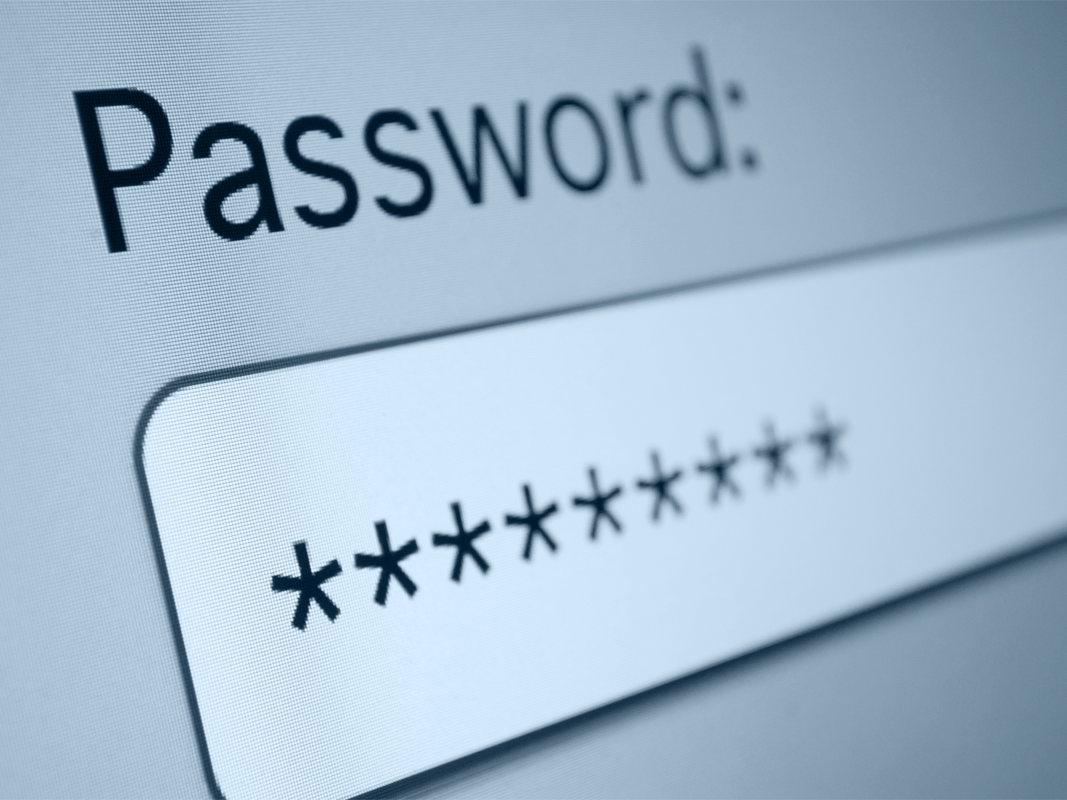
Indiana University combatting fraud with robust password policy

Andrew Hudson   ||   Oct 12, 2018  ||   

It's a potentially damaging practice, particularly for universities, with many student and faculty users and valuable assets all protected by passwords.

With this in mind, researchers at Indiana University have examined the practice of password reuse and posited ways to mitigate the risks associated with this insecure practice.

According to research conducted at the university, longer minimum passwords are the most effective way to reduce potential exposure in a third-party data breach, as well as prevent password reuse. The work being conducted by the group of researchers points to a simple way to foil criminals intent on breaking into university data.

Requiring longer and more complicated passwords resulted in a lower likelihood of password reuse, according to research findings from "Factors Influencing Password Reuse: A Case Study." The authors of the paper are Jacob Abbott, an IU Bloomington Ph.D. student; Daniel Calarco, chief of staff for the IU Office of the Vice President for IT and CIO; and L. Jean Camp, professor in the IU Bloomington School of Informatics, Computing and Engineering.

To investigate the impact of policy on password reuse, the study analyzed password policies from 22 different U.S. universities, including IU. The research then extracted sets of emails and passwords from two large data sets that were published online and contained over 1.3 billion email addresses and password combinations. Based on email addresses belonging to university domains, passwords were compiled and compared against a university's official password policy.

The findings were clear: Stringent password rules significantly lower a university's risk of personal data breaches. Some highlights from the report:

  • Passphrase requirements: a 15-character minimum length deterred the vast majority of IU users (99.98%) from reusing passwords or passphrases on other sites.
  • Universities with fewer password requirements had reuse rates potentially as high as 40%.
  • Analysis found that IU performed the best of the 22 examined universities -- and had the most extensive password requirements.

"IU has worked with security and usability faculty to design our password policies, with the result being policies that value people's time while mitigating risk," says L. Jean Camp, professor in the IU Bloomington School of Informatics, Computing and Engineering. "The length and complexity are balanced by the extended period before new passwords must be generated and the use of a longer authentication time window for applications. Indiana University's rollout of two-factor authentication is similarly a model."

In addition to its findings, the researchers offer some recommendations to safeguard university personnel and the general public:

  • Increase the minimum password length beyond 8 characters.
  • Increase maximum password length.
  • Disallow the user's name or username inside passwords.
  • Contemplate multi-factor authentication.
  • Multi-factor authentication is becoming more common and usable. IU, for example, employs Two-Step Login. Multi-factor authentication may be a viable alternative to changing the length and complexity of password policies.
Subscribe to our weekly newsletter

RECENT ARTICLES

recycling center with conveyor belts
Jun 25, 26 /

Campuses see explosion in disposable containers as takeout, mobile ordering, delivery become norm

College campuses across the country are facing a growing sustainability challenge as takeout containers and disposable packaging become a permanent part of student life. An article in Bridge Michigan, says that while many of these habits emerged during the COVID-19 pandemic, university officials say they’ve continued long after dining halls fully reopened. Students increasingly rely […]
Stephen Courchane from the University of Minnesota Twin Cities explains how they expedited card issuance by mandating photo upload prior to orientation

Integrating photo uploads with orientation slashes wait times by 95%

Many campus card offices struggle with the same challenge: getting large numbers of students through orientation without creating long lines and bottlenecks. Stephen Courchane, Director of the U Card Office at the University of Minnesota Twin Cities, explains how his office tackled the issue. They did it by partnering with the orientation office to make […]
Flags hanging on building at NYU, site for ColorID Identity Summit 2026

ColorID Identity Summit to take place at New York University, July 14-15

On July 14-15, the New York University Kimmel Center will be the location for this year's ColorID Identity Summit. The event agenda explores the latest in identity management, mobile identity, and advanced credential technologies. Ideal attendees include professionals from higher education, healthcare, enterprise, and other vertical markets who are responsible for identity and credentialing at […]
CIDN logo reversed
The only publication dedicated to the use of campus cards, mobile credentials, identity and security technology in the education market. CampusIDNews – formerly CR80News – has served more than 6,500 subscribers for more than two decades.
Twitter

Great inverview on the Public Key Open Credential (PKOC) standard with ELATEC's Jason Ouellette, Chairman of the Board for the @PSIAlliance.

Attn: friends in the biometrics space. Nominations close Friday for the annual Women in Biometrics Awards. Take five minutes to recognize a colleague or even yourself. http://WomenInBiometrics.com

Load More...
Contact
CampusIDNews is published by AVISIAN Publishing
315 E. Georgia St.
Tallahassee, FL 32301
www.AVISIAN.com[email protected]
Use our contact form to submit tips, corrections, or questions to our team.
©2026 CampusIDNews. All rights reserved.